Saturday, 23 June 2012

Queens Park Rangers Heads to Asia for Pre-Season Tour


SEPANG, 22 JUNE 2012 – Rangers fans will be thrilled to hear that Queens Park Rangers (QPR) will be making their way to the region with their official Pre-Season Asia Tour. During the tour, the team will be in three cities – Kota Kinabalu, Sabah; Kuala Lumpur in Malaysia and Surabaya, Indonesia.
 
The Barclay’s Premier League (BPL) team will face the Sabah Allstars team in Kota Kinabalu on July 17 followed by a match against the Kelantan team in Kuala Lumpur on July 20. In Surabaya, the match will see The Hoops go against Persebaya Surabaya team on 23 July.
 
AirAsia Group Commercial Head Kathleen Tan said, “We have fostered a fantastic partnership with QPR and is proud to renew our sponsorship as QPR official shirt sponsor. We are excited and thrilled to have QPR tour our major hub cities in Malaysia and Indonesia. AirAsia has been actively involved in sports sponsorship & sports marketing, however our keen interest in sports is not just about the value and branding opportunities that it gives us, but also our belief that we need to invest in the region’s youth to develop their interest and skills in international sports.”
 
“As the people’s airline, AirAsia does not only enable everyone to fly, but also to experience international sports at the local front. And with our extensive route network across Asean especially, we hope to share the joy and excitement of football to our guests from every corner of this region.”
 
QPR chief executive officer Philip Beard added, “It is an honour for Queens Park Rangers to come and play in Malaysia & Indonesia next month. Everyone at the Club is extremely excited by the Tour, and we hope it allows as many of our fans as possible in Asia to watch the team in action.”
 
“From the day Tony took over, the response and support from AirAsia has been overwhelming. This is a massive step for QPR to come and play in Asia and we hope it is the first of many more opportunities to come. I know the players and management are excited about to come in advance to a successful second season in the Premier League.”
 
To see QPR in action, fans in Malaysia can get their tickets from AirAsia RedTix. Tickets are priced between RM30 to RM200 for the matches in Malaysia. Stay tuned on when the tickets are available for sale by logging on to www.redtix.airasia.com. Details on the tickets for the Surabaya match will be announced soon.
 
AirAsia is the Official Club Partner for QPR and it was recently announced that it is also the Official Playing Kit Sponsor, with the airline’s logo to appear on all QPR’s playing kit (home, away and third shirt) for the whole duration of the 2012/13 BPL season.
 
In addition, there will also be special AirAsia QPR co-branded merchandize including t-shirts, footballs, wristbands, caps and lanyards on sale at the stadium during the friendly matches at the AirAsia booth. Those in Malaysia who has purchased their tickets online via AirAsia RedTix can also order the t-shirts online and collect it at the booth during match day.
 
AirAsia members can also win a pair of free tickets to the matches through a special online contest through the airline’s newsletter and on its website at www.airasia.com. All they have to do is submit their booking numbers for flights purchased in 2012, answer three questions on QPR and AirAsia and complete a slogan. BIG loyalty card members will stand a chance to win two pairs of tickets for the contest. The contest will begin on June 25 and ends on July 1, 2012.
 
Apart from that, 5 lucky people can also get a chance to follow the QPR team on the QPR Asia Tour to all three cities during the whole tour. All they have to do is tell AirAsia of their analytics in a blog entry of QPR’s brave battle against relegation last season in the English Premier League. Participants can submit their entries via email to facebook@airasia.com. Contest starts June 20 and ends on June 29, 2012.
 
In conjunction with the QPR Asia Tour, AirAsia will be having a special promotion. Guests can look forward to flying from Kuala Lumpur with all in fares from as low as RM29* one-way to destinations including Kuala Terengganu, Penang and Johor Bahru, RM59* to Langkawi, Palembang and Medan. Booking period for the promo is from June 26 to July 8 for the travel period of September 18 to November 30, 2012. The great, low fare offers are available online at www.airasia.com and all of AirAsia’s mobile booking platforms.
 
*All fares quoted are all-in fares, inclusive of airport tax and fuel surcharge. For one way only.
+Prices may not be inclusive of tax & may change at the time of print. Terms & conditions apply.
 
Photo caption:
AirAsia Group Head of Commercial, Kathleen Tan (third from left) and Queens Park Rangers Chief Executive Officer, Philip Beard (fourth from left) flanked by AirAsia flight attendants at the announcement of QPR’s Asia Tour. The tour will see QPR taking on the Sabah Allstars, Kelantan FC  and Persebaya Surabaya team in Kota Kinabalu (Sabah); Kuala Lumpur, Malaysia and Surabaya, Indonesia.
 
                                                             ***ENDS***
About AirAsia & AirAsia X
AirAsia, the leading and largest low-cost carrier in Asia, services the most extensive network with 150 routes. Within 10 years of operations, AirAsia has carried over 140 million guests and grown its fleet from just two aircraft to approximately 106. The airline today is proud to be a truly ASEAN (Association of Southeast Asian Nations) airline with established operations based in Malaysia, Indonesia, Thailand and Philippines servicing a network stretching across all ASEAN countries, China, India, Sri Lanka and Australia. This is further complemented by AirAsia X, its low-cost long-haul affiliate carrier that currently flies to destinations in China, Australia, Taiwan¸ Iran, Korea and Japan. AirAsia was named the World’s Best Low Cost Airline in the annual World Airline Survey by Skytrax for three consecutive years (2009, 2010, 2011).
 
Queens Park Rangers Football Club
QPR FC (www.qpr.co.uk) is a professional Football Club based in West London, England. The Club play their football in the top-flight of English football, the Barclays Premier League, under the management of former legendary striker Mark Hughes. On August 18th 2011, Tony Fernandes arrived at the Club as a majority shareholder, alongside Kamarudin Bin Meranun and Ruben Emir Gnanalingam. Amit Bhatia, who represents the Mittal Family, returned to the Club as Vice-Chairman.

12.2 Million Tourists to Bangkok is ranked third Globally

Bangkok Ranks Third Globally in context  of the Number of International Tourists Expected. Expected to receive 12.2 million international visitors in 2012
 MUMBAI, JUNE 21, 2012: Bangkok, the capital city of ‘Amazing Thailand’ has been ranked third globally in terms of the number of international tourists expected to visit the city in 2012.
MasterCard Worldwide annual Global Destination Cities Index has stated that the number of people travelling abroad continues to increase around the world despite a challenging economic environment.
Bangkok was the top ranked city in Asia and outranked cities such as Singapore, Kuala Lumpur, Hong Kong and Dubai. The index said Bangkok will attract 12.2 million visitors. Globally, the list was topped by London (16.9 million visitors), followed by Paris.
The index also placed Bangkok third in a list ranked by visitor spend. It said a total of $19.3bn will be spent by tourists in Bangkok, up 19.3 percent compared to the previous year.
Commenting on this remarkable achievement, Mr. Sethaphan Buddhani, Director for Tourism Authority of Thailand, Mumbai said “The entire team at the Tourism Authority of Thailand across the globe is proud that tourists across the world chose Bangkok as their preferred destination in Asia. Bangkok and all our major cities that attract tourists globally and especially India are indeed perceived as a value for money destination and therefore attracts travelers in search of a culturally enriched but at the same time, vibrant city. We are pleased that Bangkok has outranked cities such as New York, Madrid, Rome and Barcelona and hope that our constant efforts make Bangkok the number one most visited city worldwide”
Mr. Buddhani further elaborated,” India is a key source market of travelers for Thailand. For the calendar year 2011, over 900,000 Indian holiday and business travelers traveled to the Kingdom making Amazing Thailand the number 1 destination for outbound travelers from India.”
Bangkok is the capital and also the largest city of Thailand. It is also known as Krung Thep in the Thai language. Bangkok is one of the top cities of Southeast Asia economically. It is one of the foremost tourist destinations of the world and tourists normally travel to Bangkok for its vibrant nightlife, world renowned cuisine ranging from street food to fine dining restaurants, beautiful temples and luxury hotels. Over the last few decades, Bangkok has changed into a modern, exciting, and sophisticated city. Bangkok offers visitors not only the modern amenities they would expect from other cosmopolitan cities, but also a unique treasure trove of cultural attractions.

23 June 2012, Hong Kong : The Gujarat delegation visiting China for promotion of Vibrant Gujarat winded up their visit today at Hong Kong where it held meetings with top corporate groups and business organizations.
The India & Hong Kong Chamber of Commerce organized a seminar where the Gujarat delegation showcased the progress made by Gujarat and the opportunities that the State offers. Investors displayed keen interest and enquired about investing in the State’s financial and infrastructure sectors. The delegation also briefed the audience about the state sponsored private equity investment company - Gujarat Venture Finance Limited as well as about its operations and funds where Hong Kong based investors could make investment for assured returns.
The delegation met leading companies including those having interest in power, construction, and urban transport along with major financial institutions based in Hong Kong. In view of huge opportunities available in Gujarat these companies are keen to invest in Gujarat and develop large infrastructure through public private partnerships. Projects like urban transport, Dholera Special Investment Region, GIFT city, industrial parks among others attracted serious interest. Apart from investors, several consulting agencies that have helped China shape up its industrial infrastructure, large scale investment regions and connectivity infrastructure also evinced interest in working with Government of Gujarat in setting up mega projects across the State. The Consulate of India in Hong Kong had a detailed briefing of the delegation and plans to actively work with apex organizations and associations to facilitate participation of their members in Vibrant Gujarat 2013 Summit.
In a road show at Hong Kong, jointly organized by the Indian Consulate and the Hong Kong General Chamber of Commerce in association with CII, the delegation focussed on infrastructural and financial services sector. Several Chinese companies too have headquarters in the region and do their business and investment through Hong Kong based institutions. During the seminar, many of these companies showed interest in Gujarat’s growing economy which is led by its proactive governance and initiatives for developing a conducive business environment.
With Gujarat attracting industries on a large scale, a need is also being felt for industrial and environmental planning which can support such development on long-term basis. Hong Kong University through its School of Architecture and Planning has been involved in industrial and environmental planning of China and also has a well developed network consisting of several universities in Asia and Pacific. Centre for Environmental Planning & Technology (CEPT) university which has been assisting Government of Gujarat in its on-going efforts for industrialization, environmental planning, habitat and transport development accompanied the delegation and had a detailed discussion with Hong Kong University for collaboration and knowledge exchange. A Memorandum of Understanding is planned to be signed soon.
This visit to China and Hong Kong of the Gujarat delegation which was being led by Mr. Bharat Lal, Principal Resident Commissioner, Government of Gujarat as a follow up to the visit of Hon'ble Chief Minister Shri Narendra Modi, has given further push to rapidly growing business ties with China. From the responses received from Chinese leadership, business and industry, it is obvious that Chinese enterprises are looking towards Gujarat as their next investment destination and partner. The delegation during its visit has been focusing on attracting industries and investments in sectors which are currently witnessing huge imports from these regions. Investments in machinery & equipments, heavy engineering, large scale manufacturing among others will serve to not only save costs for local industry but is also being seen as a prudent move by Chinese firms aiming to cut down transport and labour costs as well as capture new export markets in Gulf, Africa and Europe. The State Government's approach to focus on big Chinese industries with better technology and capital to supplement Gujarat industries, will give big boost to industry, business and economic development in the State. 

Friday, 22 June 2012

Study commissioned by the Ministry of Environment and Forests says that the 24 hydroelectric power projects planned on the Ganga should be reappraised


Guest post: Amita Bhaduri
Images courtesy: Wildlife Institute of India
Expressing doubts at the major plans to expand hydropower generating capacity in Uttarakhand, a report commissioned by the Ministry of Environment and Forests has recommended that the twenty four dams planned on the Alaknanda and Bhagirathi rivers, the two main tributaries of the Ganga in Uttarakhand should not be allowed, as they will cause irretrievable harm to the river.
HEPs
Hydroelectric projects on the river Ganga
Image courtesy: www.sandrp.in
This report by the Wildlife Institute of India (WII), commissioned by the Ministry of Environment and Forests has studied the cumulative environmental and ecological impacts of hydroelectric projects in the Ganga basin on the riverine ecosystem including on terrestrial and aquatic biodiversity and has expressed fears over the feasibility of the projects.
Hydropower development in Uttarakhand
Uttarakhand is estimated to have a hydropower potential to the tune of 20236 MW against which around 1851 MW has been harnessed thus far through hydroelectric projects. The State with mighty rivers like Ganga, Yamuna, Kosi etc., is an ideal location for hydropower development owing to high heads and yields and projects like Tehri have come up as a result. 
A World Bank report (2011) has highlighted that hydropower potential is one of the most important strategic assets of the State for the development of its economy. Thus, projects of varying capacities are being implemented by State and Central Government agencies and as well as the private sector in the State.
Many of these projects have run into troubled waters and some have been halted or shelved amid intensified public protests. The State government and bureaucrats have alternatively sought to step up efforts to seek revival of the projects in order to ‘boost the dismal power situation in the State’.
The tussle between the State and the anti-dam demonstrators who are opposing the projects on religious (the Ganges river system is considered holy by the Hindus), social justice and environmental grounds escalates from time to time.
Intense public outcry and the "fast-unto-death" by eminent scientist Prof. G D Agarwal in protest against the 600 MW Loharinag Pala hydropower project in Uttarakhand had in September 2010 led the Finance Minister, who was heading a Group of Ministers looking into the issue, to announce the complete scrapping of the project.
Later, that year in November 2010 the Central Government decided at the National Ganga River Basin Authority meeting to halt work on the National Thermal Power Corporation (NTPC) owned 600 MW Lohari Nagpala and the State Government owned 480 MW Pala Maneri & 350 MW Bharav Ghatti projects. Further, owing to mounting environmental concerns, the 440 MW Vishnusagar project had to be scrapped.
The Government in addition notified the river stretch of 135 kilometres of Alaknanda-Bhagirathi as an ecologically sensitive area, and hence a dam free zone through which the river will flow freely. These are a partial admission that the process and plans of installing hydroelectric projects had been wide off the mark.
It does not however look like something is being done on a long term basis, to ameliorate the situation which the public is complaining about. For instance, after one year of stoppage of the Lohari Nagpala project, work was resumed. Prof. G D Agarwal has in the meanwhile this year carried out a "fast-unto-death" in protest against this project located on the Bhagirathi river. 
Disenchanting report by IIT-Roorkee
Earlier in June 2011, a study carried out by the Alternate Hydro Energy Centre (AHEC) of IIT-Roorkee for MoEF had assessed the cumulative impact of seventy hydro-power projects commissioned or in various stages of development on these rivers. 54 of these were run of the river while the rest were storage projects.
This report was to estimate the extent to which hydropower potential identified in the basins should be developed without risking stability of landforms and environment. The report came as a big disappointment and restrictions were not placed in the development of hydropower in the two basins, and instead more hydroelectric projects were advocated.
While both Alaknanda and Bhagirathi rivers have their origin in glaciers, the report suggests that glaciers are in much higher altitudes, upstream and too distant to be affected by the hydropower projects. The study does not take into consideration the fact that Himalayan glaciers are retreating at a fast pace and that less water would be available in the rivers negatively impacting the hydropower projects.
Balganga
Balganga sub-basin
The report calculates that the existing hydropower projects would affect 47.3 per cent of Bhagirathi and its tributaries and 43.9 per cent of Alaknanda and its tributaries. But it does not assess what the cumulative impact of such changes would be on the rivers and their tributaries.
On the contrary it advocates fixing a threshold at seventy per cent wherein a river and its tributaries may be allowed to be affected by way of submergence and diversion up to seventy per cent of its length. While the report admits that over seventy per cent of Bhagirathi river was getting affected due to Loharinag Pala project, it sought the revival of the projects instead of a moratorium on them.
The study recognizes that hydropower projects restrict the flow of rivers and that a certain quantity of water should “always flow in the rivers”. It describes this flow as “environmental flow” but bases its calculations on the “minimum flow” required, ignoring needs and expectations of people living on the banks, and flows required to help the flora and fauna to prosper and flourish.
The report acknowledges that the minimum flow may reduce power generation. It states that the reduction may make several schemes unviable especially small-scale hydropower schemes. The study however does not talk of scrapping the projects to prevent this.
Himanshu Thakkar of the South Asian Network on Dams, Rivers and People, states that “the report has not done cumulative impact assessment, has shown bias in favour of hydropower projects and that its recommendations and conclusions are unfounded. It has not looked at the poor quality of EIAs-EMPs done for these projects and almost universal non-compliance of environment norms in the implementation of these projects. In short, the shoddy report is a lost opportunity and needs to be rejected, even while following up on some of the half hearted recommendations.” [Ganga hydel impact assessment report biased, Prasanna Mohanty, www.GovernanceNow.com, 2011]
Bhagirathi
Bhagirathi river
Wildlife Institue of India report cautions about the threat to biodiversity
Wildlife Institute of India had been approached by the Ministry of Environment and Forests to conduct a study on the cumulative environmental/ecological impacts of hydroelectric projects in the Bhagirathi and Alaknanda river basins on the riverine ecosystem, including on terrestrial and aquatic biodiversity. This assessment takes into account the cumulative impact of 70 hydroelectric projects in the Alakananda and Bhagirathi basins of which 17 are existing (1851 MW), 14 are under-construction (2538 MW) and 39 are proposed (4644 MW).
The study aimed to assess the baseline status of rare, endangered and threatened (RET) species of flora and fauna dependent on riverine habitats and flood-plains of Alaknanda and Bhagirathi river basins.
Sub-basins Alaknanda and Bhagirathi
Sub-basins within Alaknanda and Bhagirathi
Critically important habitats along the existing and planned hydropower projects located on rivers Alaknanda and Bhagirathi up to Devaprayag were to be identified. The study delineated river stretches critical for conservation of rare, endangered and threatened (RET) aquatic species. It also attempted to assess the key habitat variables for RET species, including minimum flows and volume of water for ecological sustainability of the two rivers.
The study warns that the Uttarakhand hydropower projects threaten the biodiversity of Ganga. The study was released just before the meeting of the National Ganga River Basin Authority in April, 2012 which side tracked the issue of hydel projects, and expresses concern over the planned hydroelectric projects, that add up to a capacity of 2,600 MW in Uttarakhand.
As regards impact on aquatic biodiversity and their habitats, the study says that if all the proposed hydropower projects are implemented, of the 1121 km long stretch of the rivers that flow in the entire Alaknanda-Bhagirathi basins, atleast 47 per cent of the total stretch of the rivers in the entire basin, will be affected.

Critical habitats
Critical habitats on Alaknanda-Bhagirathi sub-basins
Therefore, significant area of the fish habitat would either be modified or lost due to th eproposed hydropower projects in the basin. Out of 76 species of fish reported in the entire basin, a total of 66 species have been reported in the influence zones of hydropower projects. This means that about 87 per cent of fish species would be affected, if all proposed hydropower projects get implemented in the basin.
Among 18 sub-basins in the region, the most affected sub-basins with respect to fish habitat modification/loss would be Bhagirathi III and IV (71 per cent), Birahi Ganga (74 per cent), Alaknanda I & II (48 per cent), Mandakini (44 per cent), Balganga (40 per cent) and Nandakini (35 per cent). Although, fish was not found in Dhauliganga, nearly 94 per cent of stretch of this river would be affected which in turn would adversely impact the downstream fish species, in the main Alaknanda river.
The report states that dams or any construction across rivers is always detrimental to the survival of fishes especially of migrants, which use different habitats for completing life history requirements. There are a minimum of 17 species of migrant fishes found in the Alaknanda and Bhagirathi basins, which include three species of Mahseer that are long distance migrants.
Any obstacle such as a dam or a barrage across a river will hamper normal migratory behaviour of these fishes and consequently affect their breeding cycle. Their migration has already been obstructed by Tehri dam. Based on literature and observations made in various studies, it is confirmed that there has been a general decline in the populations of Mahseer in the upstream of Bhagirathi river due to the barrier effect caused by the Tehri dam. The report notes that the efficiency of fish pass in the Himalayan rivers would be highly reduced, if the dam height is more than 16 m.
Changes in the sedimentation flows due to dam/barrier construction especially in Himalayan rivers will also have an adverse impact on fish habitats. It is expected that submersible zones of hydropower projects would be unsuitable for several fishes especially Snow Trout and Himalayan Loaches. Therefore, the hydropower projects with longer stretches of submersible zones but without proper silt removal plans would be detrimental to populations of several Himalayan fish species. Adverse impacts on the aquatic biodiversity are expected because of changes in the natural flow due to hydropower projects in the Alaknanda and Bhagirathi basin.
15 of these hydropower projects would stop the nutrient flow either for longer period or for a shorter period, depending upon the presence of a dam or barrage. A minimum 162.6 km long stretch of the rivers, in the entire basin would be submerged due to various hydropower projects. These submerged rivers would act as nutrient traps. Therefore, changes in the nutrient flow due to hydropower projects would affect the overall composition of the fish community in the Alaknanda and Bhagirathi basins.
On the biodiversity profile and critical habitats, the report notes that over 35 mammals, 350 birds and 1000 plants have been reported in these sub-basins. Of these, five each of mammals and birds, and 55 plant species are rare, endangered or threatened. Bhagirathi-I, Mandakini, Alaknanda-III, Dhauli ganga, Rishi and Bhyundar ganga subbasins have very high terrestrial biodiversity values.
Species such as the Snow Leopard, Brown Bear, Musk Deer, Cheer Pheasant and three species of vultures are found in these sub-basins. Snow Leopard is extremely rare and occurs only in Bhagirathi-I, Mandakini, Alaknanda -III, Bhyundar, Dhauliganga, Rishi Ganga, Pindar,and Nandakini sub-basins.
The forest types of the Alaknanda basin range from the Himalayan subtropical scrub at lower elevations, temperate broad leaved forests in the middle elevations to sub-alpine oak and conifer forests at ‘tree line’ at the higher elevations whereas that of Bhagirathi basin ranges from the Himalayan subtropical scrub at lower elevations to sub-alpine birch-rhododendron forests at ‘tree line’.
The two basins support over 300 medicinal plants within which the highest number (over 150) occur in Alaknanda I sub-basin. The Alaknanda and Bhagirathi sub-basins also harbour certain plant species which are endemic to Uttarakhand.
The minimum environmental flows that have been suggested need to be reviewed periodically in relation with changes in the population status of fish. This review may be carried out once in every five years with inputs from professional institutions such as National Institute of Hydrology, IIT Roorkee, National Bureau of Fish Genetic Resources, Directorate of Cold Water Fisheries Research, local universities etc.
The implementation of the current hydropower power plan which envisages the operation of 70 hydropower projects is likely to significantly impact the aquatic biodiversity of Bhagirathi IV and Ganga sub-basins and the report calls for review of the 24 proposed projects.
Conclusion
In the final analysis, the combined footprint of all 24 projects have been considered for their potential to impact areas with biodiversity values (both aquatic and terrestrial), critically important habitats for RET and IWPA protected species in different sub-basins in the two larger landscape units, the Alaknanda and Bhagirathi basins. Some of these sub-basins harbour areas of Outstanding Universal Values.
Power generation companies like NHPC, NTPC, Lanco, GMR Energy, GVK and JP Power were setting up projects in Uttarakhand. According to a report in the Business Standard, “over Rs 17,000 crore worth of investments in Uttarakhand would be impacted if the Government stops work on various hydel projects in the state.”
The big projects that are going to be affected are the 530 MW Kotlibhel II, the 250 MW Tamak Lata on Dhauli Ganga, the 320 MW Kotlibhel IB on Alaknanda, the 381 MW Bharon Ghati and the195 MW Kotlibhel IA on Bhagirathi.
The WII report concludes by stating that “ecological prudence therefore requires that securing long term biodiversity conservation should get precedence over economic considerations visualized in commissioning these 24 projects.”
An article in IBNLive [300 dams on the Ganga: A bane or a boon? Bahar Dutt, 2012] claims that the Government has planned over 300 dams on its various tributaries to generate electricity and the move comes despite the  Government-commissioned green panel report (by Wildlife Institute of India) that has recommended scrapping many of the dams citing environmental concerns.
The question remains as to whether the government has taken note of the study and as to when will it rechannel its efforts to protect and regenerate the health of the two river systems.

++++++++++++++++++++++++++++++
With deep regards

कबीर/کبیر

Phone: 00-91-85-68-084-079

Anil Joshi, under secretary  in Secretariat general administration department  works on the 7th floor, was informed of the fire on his cell phone. He reports that  more than 95 per cent of the employees have been evacuated, but saw a  number of people stranded on the 4th, 5th and 6th floor of the building.

Joshi said he and other employees of his department ran down the stairs to safety, but faced breathing problems as they ran down the staircase because of the thick smoke.

Mantralaya engulfed with fire at 1.50 PM that spreads to CM's cabin media reports confirms that the fire broke out at NCP minister Babanrao Pachpute's office. Eight  fire tender  have rushed to the spot and battling the blaze  so far, there are no reports of any casualties. Maharashtra Chief Secretary has ordered immediate evacuation of the entire building. Pachpute said the fire has spread to the Chief Minister's office on the sixth floor.

Thursday, 21 June 2012

Anil Joshi, under secretary  in Secretariat general administration department  works on the 7th floor, was informed of the fire on his cell phone. He reports that  more than 95 per cent of the employees have been evacuated, but saw a  number of people stranded on the 4th, 5th and 6th floor of the building.

Joshi said he and other employees of his department ran down the stairs to safety, but faced breathing problems as they ran down the staircase because of the thick smoke.

Mantralaya engulfed with fire at 1.50 PM that spreads to CM's cabin media reports confirms that the fire broke out at NCP minister Babanrao Pachpute's office. Eight  fire tender  have rushed to the spot and battling the blaze  so far, there are no reports of any casualties. Maharashtra Chief Secretary has ordered immediate evacuation of the entire building. Pachpute said the fire has spread to the Chief Minister's office on the sixth floor.

The state secretariat is called Mantralaya, which is in south Mumbai near Marine Drive. Minister of Forests Patangrao Kadam speaking to e channel said the CM Prithviraj Chavan was not in the building.


The fire started from the fourth floor houses the urban development department. The chief minister's office is in the sixth floor of the same building. No reports of anyone injured as yet. Fire breaks out in the ministry of forests at Mantralaya:The fourth floor  in which the fire broke out has an office of  Babanrao Panchphute, who is the minister of forests.

Smoke bellowing out of the fourth floor. The fire broke out and is yet to be contained. Mantralaya fire alarm system obsolete Major fire at 4th floor of Maharashtra secretariat:A major fire has broken out on the fourth floor of the Maharashtra secretariat, Mantralaya. Three ambulances and eight fire tenders have been rushed to the spot. The building has been evacuated.

‘Amity University’ – Patents and R&D Claims – Exclusive

‘Amity University’ –  Patents and R&D Claims – Exclusive
This is to alert students taking admissions in Private University that even the Biggest and Highest rated Universities like Amity University do BOGUS research.
I have found all Amity University patents are Bogus and income from all patents is not even Rs.0.62 lakh or 0.5% of its annual income Rs.336 crores as per UGC report that too seems to be funded by DST.
[After this, the Committee visited the Amity Innovation Incubator set up on the campus with the support of DST (Govt. of India).]
[6. The Amity University, Uttar Pradesh has a good focus on research. It has a number of well equipped modern laboratories and is recognized by the Department of Science and Technology of the Government of India as a Scientific & Industrial Research Organization (SIRO). And, the University is now having a number of research projects funded by the various Government of India agencies like DST, DBT, CSIR, DRDO.  The University has some well qualified/experienced scientists as faculty members, who have already filed a number of patents based on their R&D work at the University.. Two of these patents have been published by the Patents Office recently.]
When a Large University doesn’t have a single ‘Private Sector Client’ it indicates ‘Dullards’ are in charge of S&T programs.
Do thorough research before taking admissions?
Competition Commission May Take Strict Action for Misleading Advs.
Ravinder Singh
June21, 2012
Source of Finance and quantum of
funds available:
Provisional figures for the year 2008-09 (Rs. in Crores)
From Fees:
327.43
From Security Deposit
8.05
From Research & Development
0.62
From other source(interest on FD)
NIL
Total
336.10
Yes, Hostels for boys and girls with all modern amenities are available. Students are provided good hostel rooms, including A/C, if required. But, the annual rent for each student seems to be on the higher side: Rs. 56,000/- for non-A/C and Rs 1 Lakh for A/C.
B. DEFICIENCIES
1. University Academic & Administrative structure not fully as per the University Act.:
• No Faculties established;
• No Deans of Faculties appointed;
• Departmental structure missing;
• Posts of Director General not provided in the Act;
• Too many Amity Schools/Institutes set up mostly with narrow focus;
• Method of designation of Schools/Institutes/Centres not rationalized.
2. Designations such as Director General is familiar in the University set up.
3. Pre-retirement positions held rather than academic achievements given weightage;
4. No upper age limit specified for personnel appointed in the University;
5. No. of students admitted to some courses too large, e.g., international business, biotechnology etc;
6. Cadre ratio as required by Statutory bodies for Professor, Assistant Professor,
Lecturer not followed;.
7. Qualifications & experience requirements for faculty, not strictly followed as per University Regulations on recruitment,
8. Nomenclature of some degrees not in consonance with the UGC recognized degree nomenclature.(.e.g. Bachelor of Financial Investment and Analysis);
9. Many degrees awarded in Management discipline, all being too highly specialized;
10. Not a single Unit of basic sciences set-up to cater to common subjects in various Scools/Institutes. (e.g., Chemistry, Physics, Biology and Mathematics);
11. No residential accommodation on campus, to either faculty or staff members or even the Vice-Chancellor;
12. No recreation facilities on Campus for faculty or non-teaching staff;
13. Off-Campus Centre set-up by University in the State and outside the State, does not seem to empower them;
14. Frequency of meetings of University Authorities too low (2 in a year), for a new University; besides Minutes of the meetings are not detailed;
15. Reservation Policy not followed in recruitment of faculty/non-teaching staff members and also in students’ admissions;
16. Immovable property not in the name of the University; but only in the name of the Sponsoring Society;
17. Many teachers in the advanced age group appointed and given administrative responsibilities;
18. Some Statutes framed beyond the provisions made in the University Act, e.g., Statute No. 3(1) in the first Statutes based on Section 1 of the Act;
19. No notified Policy or fee structure and student intake.
20. Academic flexibility absent in the Degree programmes;
21. Distance Education Programmes conducted in professional subjects without the approval of UGC-AICTE-DEC Joint Committee;
22. Social security and related benefits including GPF/CPF not facilitated for faculty and non-teaching staff;
23. Much importance given for moderation of examination results, that may lead to doubts on the fairness of the system;
 
To:
Nksagar_1@yahoo.com
 
Change.org
Help 12 year old Shaan get his fundamental right to water.
Sign Shaan's Petition
Naresh -
27 days without water! Shaan and his family in Sangham Vihar didn’t get water for almost a month, his father who works as a construction labour borrowed water from his friends and paid bribes to the water mafia in-order to help the family survive. The family has no water to take a shower.
Recently, Chief Minister, Sheila Dikshit made big statements on water wastage. But it seems like the Delhi Jal Board has been wasting large amounts of water while distributing it. [1]
News reports confirm that the official tanker mafia has been profiteering on the precious water that the Jal Board is supposed to supply.[2]
The World Health Organisation advised the Delhi Govt. to ensure a daily supply of 120 litres of water per individual in Delhi, but there are many like Shaan’s family who hardly get 20 litres everyday.
Media says that Delhi is going through an acute water crisis. Shaan questions “If there was water shortage in New Delhi then why is there sufficient supply of water in Water Theme Parks, Five star Hotels, expensive residential areas and Restaurants?”
Shaan believes that water is a fundamental right for every human being and the Delhi Govt. should ensure equal distribution of water.
Thanks for helping Shaan fight for water equality -- he believes that this can help Delhi fight the water crisis.
Tamseel and the Change.org team

News Sources:
[1] NDTV: Sheila Dikshit orders cut in supply to her residence
http://www.ndtv.com/article/cities/delhi-water-crisis-sheila-dikshit-orders-cut-in-supply-to-her-residence-233100
[2] India Today: Delhi thirsts as official Tanker mafia seat DJB Water
http://indiatoday.intoday.in/story/delhi-thirsts-official-tanker-mafia-steal-djb-water/1/201112.html
[3] CNN IBN: Delhi pins hopes on Haryana
http://ibnlive.in.com/news/water-crisis-delhi-pins-hopes-on-haryana/266960-3.html
[4] Rediff News: Dangers of India's water policy
http://www.rediff.com/news/column/the-dangers-of-indias-water-policy/20120618.htm

Super Bugs, Super Pesticides, Super Bills – Delhi Jal Board


 Date 20 June 2012
Honorable Prime Minister,
Dr. Manmohan Singh, and Copy to
Honorable Chief Minister of Delhi,
Smt. Sheila Dikshit,
New Delhi 110011

Respected Sir,

When there is a Complaint of Urgent Public Concern – Governor of a State or Mayor of a County in USA put up the matter before ‘Public Utility Commission’ and Chair the Public Hearing Proceedings Like A Court and announce the Order on the same day that is applicable to the state or city.

In the national capital one may write Hundreds of Complaints over Tens of Year there is even not a Proper Acknowledgment.

Most shocking at Important Delhi Government Public Meetings – bunch of Dullards are invited but none of the Experts – thus there is no Progress.

Super Bugs
Delhi Water Allocation 31 Liter Per Head Per Day

Delhi gets Sewage and Drainage of Haryana essentially because of ‘Defective Yamuna Water Sharing Agreement’ concluded by Madan Lal Khurana in 1994. Out of 31 Liter Per Day Per Head allocated – even this supply is not making through Haryana and 50% of Water Treated By DJB is Lost In Pipes.

Delhi Annual Share 724 MCM But 19 MCM in Summer Months
Here in the Water Sharing Agreement in the end out of 724 MCM water allocated to Delhi, the national capital just 76 MCM is available for March-June four months, just over 10% for four Summer Months when atleast 40% of the allocation was required. Thus 0.63MCM Riparian water is available for 20 million people per day– 31 liters per capita. Some Ganga and Satlej non riparian water is also available but is too inadequate.

Almost 40% to 50% of treated water is lost to leakages. 40% to 100% population get Contaminated ground water, direct or diluted.

Thus Delhi Get Many Thousand Times More Harmful Pathogens in Water Supply Source That is Contaminated Again After Treatment Mixing With Sewage As Both Water Mains and Sewage Lines Run Next to Each Other.

Super Pesticides
CSE Reported 600 Times More Pesticides Consumed By Delhi Residents Since 2002 Than in Blood of Cotton Farmers of Bhatinda
Since 2002 Winter since the CSE report pointing to very high level of Pesticides in Ground Water that is Source of Water for Bottled Water Companies Delhi residents had consumed more than 600 Times More Pesticides than in Blood of Bhatinda Farmers accumulated over decade. (Page 20 Attached)

Ø      Pesticides in Delhi Ground Water 0.0757mg/Liter, Max 0.1735 mg/Liter
3500 Days at 2 Liters/day; 7000 Liters = 530mg to 1245mg

Ø      Pesticides Accumulated in life in Blood of Bhatinda Cotton Farmers
0.1224mg/Liter to 0.7627mg/Liter at 5 Liters = 0.6120mg to 3.6115mg

40% to 50% Delhi Population Directly Depends on Contaminated Ground Water in Summer, Rest Get Untreated Tube-well Water Mixed With Yamuna Water Supply.

Thus 30% to 100% Water Supply To Delhi Is Sourced From Contaminated Ground Water.

Super Water Bills
DJB Hired Recovery Agents To Extort Consumers
Rs.100/month Approved Tariff – DJB Charge Rs.1000/- to Rs.10,000/-PM

Sir just a Look at the 2012 Tariff Applicable as in attached PDF also a Household Should be Charged Rs.100/- per month.
Monthly Consumption KL
Service Charges in Rs
Volumetric in Charge Per Kl in  Rs.
0-10
60.50
2.42
10-20
121.00
3.63
20-30
181.50
18.15
> 30
242.00
30.25

It is admitted fact that in spite of short supply DJB charges on average 15 kiloliter per month.

Out of that 40% to 50% is sourced from ground water.

In my farm in Punjab it cost just 3 units of electricity to draw 90 kiloliters of water so allowing for Rs.15 as electricity charges and Rs.15 for O&M of pumps it cost just 0.30 per kiloliter to pump Contaminated Ground Water.

So Break Up is 9 Kiloliter of Treated and then Sewage Mixed Water Supply and 6 kiloliter of Ground Contaminated Water Supply.

Cost of 9 Kiloliter of treated water PM is Rs.60.50 + 2.42x9x1.6 = 60.50 + 34.85
= Rs.95.35.

Cost of 6 kiloliters of Ground Water Per Month at Rs.0.30 = Rs.1.80.

Monthly Household Bill = Rs. 95.35 + Rs. 1.80 = Rs. 97.35 Lets say Rs.100 per month.
WHEN A FAMILY OF FIVE SHOULD BE CHARGED Rs. 100/ PER MONTH – PER CAPITA MONTHLY BILLS EXCEED Rs. 1000/- to Rs.3000/-. DJB has hired ‘RECOVERY AGENTS’ To Recover Illegal Bills.

Responses to My Petition Were –

1. Delhi Government had failed to get Renuka, Lakhwar and Vyasi Dams built to ensure Full Clean Water Supply from Yamuna.

2. Railways Refused to provide Shatabdi Terminal at Safdarjung Station – some time in recent Past Safdarjung Station was used as Main Terminal all trains when some maintenance work was on at New Delhi station.

3. Delhi Transport refused to admit there is inadequate Bus Service and introduce Time Table that indicates Bus Services Operated By DTC.

4. Work on Undesirable Delhi Metro Extensions was Speeded UP even as reports pointed to Interstate Lines Taking 75% Passenger Traffic And For Interstate Traffic Surface Rail Lines Like Mumbai Locals Are 2x Faster and Cost a third.

5. There was no response to ‘Play Grounds’ for Delhi populations.

6. There was no response to ‘Disneyland in Delhi’ for entertainment of Children of 500 million North Indians.

7. There was no program to lay Under Ground Sewage Lines replacing Open Sewage Drains.

8. There is no Progress to Ensure Uninterrupted Power Supply and Regulate Power Supply to Large 10KW+ Consumers.

9. There is no Farmers Markets where farmers can sell their produce ‘Directly’ without middlemen in spite of Skyrocketing Food Prices.

REMEDY: -

A. PMO and Delhi Government to Introduce ‘Public Utility Commissions’

B. PMO and Delhi Government to Engage Professional Experts.

Thank you,
Faithfully,

Ravinder Singh*
Inventor & Consultant
Y-77, Hauz Khas, New Delhi 110016
Progressindia008@yahoo.com 

US Secretary of State Hillary Clinton to meet Russian Foreign Minister Sergei Lavrov next week in an effort to gain Russia's cooperation in ending the Syrian crisis.State Department spokesperson Victoria Nuland said in a statement on Wednesday that Clinton will meet Lavrov in St. Petersburg, Russia, next Thursday.

The announcement came after US President Barack Obama and Russian President Vladimir Putin failed to narrow their differences on Syria in their meeting on Monday in Mexico. They met on the sidelines of the Group of 20 Summit.

The United States is seeking an early resignation of Syrian President Bashar al-Assad, while Russia insists on non-interference in Syria's domestic affairs. Escalating violence in Syria has forced UN observers in the nation to suspend their activities.Clinton is expected to ask once again for Russian cooperation for the removal of Assad.

Twenty-eight soldiers and a Shiite Muslim cleric were among 39 people killed in violence across Syria today, the Syrian Observatory for Human Rights said. At least 20 troops were killed in fierce clashes with rebel fighters in the northwestern province of Latakia, the Britain-based watchdog said. Five rebels were also killed in the clashes that began late yesterday and continued through dawn today in a region known as the Kurdish Mountain near the border with Turkey. "The majority died in direct fighting with the rebels, while other soldiers were killed in a rebel attack on two buildings, which the army was using to launch mortar attacks against the Kurdish Mountain," Observatory head Rami Abdel Rahman told the news agency. Dozens of soldiers were also wounded, Abdel Rahman said. "A number of soldiers, including an officer, were captured by the rebels, who also took their weapons," he added. In Idlib, another northwestern province that borders Turkey, five government troops were killed when a car bomb exploded at their checkpoint overnight.Explosions and shooting were also heard in the town of Maaret al-Numan, the Observatory said. In the central province of Hama, clashes in the town of Kernaz left three soldiers dead. Shelling by government troops also killed a man and his wife. "Unidentified gunmen assassinated a Shiite cleric in Sayyida Zeinab," the Observatory said, referring to an area of south Damascus that houses a revered Shiite shrine of the same name and is home to many Iraqi refugees

Wednesday, 20 June 2012

To:
nksagar_1@yahoo.com


Add this sender to your address book Click to view this email in a browser
Vol II, Issue 12: June 15, 2012 Activities   News   Reader Reactions   Members   Contact     Print Version  

President's Message

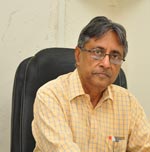
President-Mr V.K. Agarwal
"We welcome the initiatives announced in the policy, but they are at best tactical, not strategic. Now that Indian exports have become more competitive, we need a well thought-out strategy to push our products and services in countries where we have been outcompeted in several product categories especially in ASEAN, African and Latin American markets. "
- V.K. Agarwal, President FISME
(On foreign trade policy)
Read full press release

NID Design workshop

Date: June 27-29 , 2012
Venue: , Ahmedabad)
See Details

Avnet X-fest 2012

Date:July-August, 2012
Venue: Various cities across Asia
See Details

Electronics Rocks 2012

Date: August 30-31, 2012
Venue: Bangalore
See Details

NCEDAR 2012

Date:December 4-6, 2012
Venue: Bangalore
See Details

MSMEs say weak Re will fail to spur growth: Survey
FISME survey
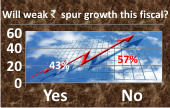
According to The FISME Factor survey, a majority of MSMEs, 57%, think the competitive advantage provided by the weak rupee will fail to spur growth unless the government takes strategic steps.
Dear Readers,
FISME has once again shown the way when it comes to protecting the interests of the Indian MSME sector. While most industry bodies merely welcomed the measures announced in the annual supplement to India’s foreign trade policy on June 5, 2012, FISME boldly pointed out that the measures were at best tactical and not strategic in nature. The FISME President hit the nail on the head by saying we need to take advantage of the “historic opportunity” presented by the weak rupee and step up strategic efforts for Indian exporters to penetrate new markets and cut their dependence on the troubled Eurozone and the sluggish US market. FISME has rightly highlighted that the trade policy has failed to do that and it must be supplemented with a strategic thrust to help Indian exporters penetrate new markets now that they are more competitive compared to their other Asian competitors. In this issue, we bring to you a few articles which bolster this FISME view point. Read and stay ahead of the competition!
Editor
Advertise in this newsletter

Trade Trends

India’s Look East Policy and Myanmar

The normalization of relations with Myanmar under India’s Look East Policy will help Indian exporters to penetrate the huge potential market represented by Myanmar, the ASEAN bloc and other South and Southeast Asian countries, writes Absar Alam

Latest ‘sops' will help exporters not exports hit by global recession


The Commerce Ministry has just released the annual supplement to the Foreign Trade Policy 2009-14 amidst a pervasive gloom over almost the entire global economy.

Policy Polemic

Re-aligning India's export focus – the need of the hour


After India's export growth staggered to 3.2 per cent in April, the industry was expecting some big-ticket reforms to kick-start an ailing manufacturing sector and revitalise exports.

Global risks and domestic response


After India's export growth staggered to 3.2 per cent in April, the industry was expecting some big-ticket reforms to kick-start an ailing manufacturing sector and revitalise exports.

Finance Fundamentals

Securing the entire family with Group Health Insurance policy
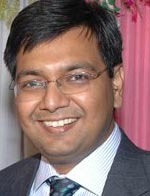

Group Health Insurance provides many advantages over individual insurance for both employers and employees. Argues Abhishek Bondia.

Marketing Mantras

Ways to get ads for your SME website


Having a website for your business to promote the products or services is always the icing on the cake. Your potential customer can have an online view of the product on your website and that you can convert it into a business opportunity.
 

Directory of Testing Laboratories in India

Directory of Testing Laboratories in India
Buy our one-of-a-kind guide to all industrial testing laboratories in India. Find the one most convenient for getting your products tested and certified. An invaluable compendium for all industrial units and exporters.
PP: 894, Hard Cover.
Price: Rs 900.
50% discount for members.

Handbook for Managing Export Payment Risks 
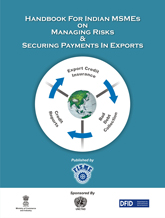
Fismi-Book-Cover-front
If you are an exporter you simply cannot do without this unique publication which tells you how to manage payment and other risks arising from exports.
PP: 78.
Price: Rs 300.
50% discount for members.

Free Publications

Fertilizer quality control in India: Need for change 

Fertilizer-Book-small
This monograph argues for a systemic change in fertiliser quality control. Essential reading for those in policy-making positions.
 
 
FISME regularly receives monthly reports on the economies of various countries from their missions in India. These reports provide information on key economic parameters, trade related information and all news relevant for importers and exporters. In this edition you can take a look at reports on:

FISME-NID hold design workshop for Meerut Scissors cluster

FISME in collaboration with the National Institute of Design organised a five-day workshop (June 12-16, 2012) in Meerut to present to stakeholders the results of a need assessment survey for design interventions in the Meerut scissors manufacturing cluster. The survey was conducted by Industrial Designer and Design Consultant Amita Bhatnagar on behalf FISME and NID under the MSME Design Clinic Scheme. The workshop was attended by about 40 scissor manufacturers located in the scissor manufacturing cluster in and around Meerut. At the workshop, the design consultant together with FISME and NID officials made presentations on the survey results and sought the views of the manufacturers regarding the results and recommendations of the survey.

FISME organises Seminar on MSMEs in GIM, 2012

FISME organised a seminar on micro, small and medium enterprises (MSMEs) during the Global Investor’s Meet, 2012, in Bangalore. While the GIM was during June 6-8, the seminar on MSMEs was organised on June 7, 2012. Immediate past President of FISME Shri Mohan Suresh delivered the welcome address at the seminar. Investors from the MSME sector, directors and officials of public and private sector banks, government officials, media representatives and visitors interested in the MSME sector were present at the seminar.
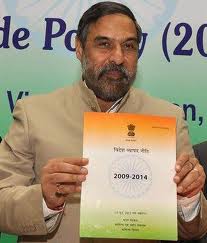
Trade policy tactical, strategic thrust needed, says FISME

As compared to most other leading industry bodies in India, FISME, India’s leading MSME organisation, took a different stand on the annual supplement to India’s foreign trade policy announced on June 5, 2012 by the Commerce and Industry Minister Mr Anand Sharma. While welcoming the measures announced in the policy, FISME was, perhaps, the only industry body in India that pointed out that these measures were at best tactical and not strategic and they would have to be supplemented with a strategic thrust to take advantage of the depreciation of the rupee which is here to stay in the short and medium term. “These initiatives are at best tactical not strategic,” FISME President Mr V.K. Agarwal said in a press statement that got wide coverage in the media.

Has the govt. failed to provide a strategic thrust in the measures announced in the annual supplement to India's foreign trade policy on June 5, 2012?

Planning Commission survey on business environment

On behalf of the Planning Commission of India, the Institute for Competitiveness, New Delhi, is conducting a survey of Indian micro, small and medium enterprises to assess the business environment of each state of India. The response to the questionnaire will help the Indian government to formulate policies for improving business conditions in every state and enhancing the overall competitiveness of the country. All MSME readers are requested to enthusiastically respond to the questionnaire. The questionnaire is available at http://competitiveness.in/india-competitiveness/planning-commission or Download Questionnaire and will take around 20 minutes to fill up.
AITD survey on India-Bangladesh Trade Facilitation
On behalf of UNESCAP, the Asian Institute of Transport Development (AITD), New Delhi, is conducting a trade facilitation study between India and Bangladesh. The objective of the study is to analyse the impediments of cross border trade between the two countries. Accordingly, policy recommendations would be made to government for simplification of trade procedure. The AITD is conducting a questionnaire survey of stake holders, particularly exporters as part of this study. Readers are requested to respond to the questionnaire and send it to asianinstitute.del@gmail.com Or alamabsar@gmail.com The questionnaire is available at Download Questionnaires.doc and will take around 10 minutes to fill up.

Macro Metre

Inflation rises in May: Analysts expect RBI to cut rates

Despite a pick-up in the Wholesale Price Index (WPI) for the month of May, analysts are optimistic that the Reserve Bank of India (RBI) will go for a cut in its key policy rates on June 18. The rise in the WPI to 7.55 per cent from 7.23 per cent in April came as both food and fuel prices picked up. Traders said that core inflation, which excludes volatile food and fuel prices, was around 5 percent, giving the Reserve Bank of India (RBI) room to cut its policy rate.

Read More    Bach to Top

April IIP at 0.1% versus -3.2% in March, worse than expected

Industrial production growth rate slowed down sharply to 0.1 per cent in April versus (-) 3.2 per cent due to contraction in capital goods and dip in manufacturing output, reflecting the sluggish state of the economy that may prompt RBI to cut lending rates. Growth in factory output, as measured by the Index of Industrial Production (IIP), was 5.3 per cent in April last year. The slowdown in industrial production is likely to put pressure on the Reserve Bank to cut lending rates at its mid-quarterly review on June 18.
Read More    Bach to Top

Exports shrink 4%, imports dip 7.4% in May

The Government's miseries on the economic front are mounting. After a flat industrial output growth in April, the provisional data released on Thursday by the Commerce Ministry revealed that exports in May shrank 4.16 per cent year-on-year to $25.68 billion. The growth slump (the second time in three months) was due to the weak demand in the traditional markets — the European Union and the US.
Read More   Bach to Top

Domestic Digest

SBI cuts SME, agri loan rates by 50-350 bps

State Bank of India (SBI), the largest public sector lender in the country, reduced its loan rates for the agriculture and small & medium enterprise (SME) sectors by 50-350 basis points. The new rates, effective from June 1, aimed at pushing credit off take comes three days before the Reserve Bank of India’s (RBI’s) mid-quarter monetary policy review. Santosh Nayar, deputy managing director and group head, corporate accounts, told reporters recently. Adding: “The interest rate on retail loans such as personal, housing and car loans have been untouched.”
Read More   Bach to Top

SBI lists 600 branches to target SME clusters

India's largest bank, State Bank of India (SBI), has assigned 600 bank branches to target micro, small and medium enterprise (SME) clusters across the country. “We are in the process of mapping these branches to SME clusters across the country The credit delivery to SMEs becomes faster by targeting these clusters,” said Manas Kumar Nag, chief general manager, SME Business Unit, SBI.
Read More    Bach to Top

N-E demands revision of NEIIPP to put thrust on MSMEs

The North Eastern states have demanded “revision” of the centre sponsored North East Industrial and Investment Promotion Policy (NEIIPP), 2007 to shift the focus from heavy industry to micro and small scale sector. The eight North Eastern states, including Sikkim, have collectively stated that though the NEIIPP “had been good for the region” it needs to put thrust on micro and small scale sector as there were “constraints” on the part of the states in attracting big ticket investments.
Read More   Bach to Top

Huge demand for SME financing not met: Crisil

There is a deficit of Rs 10 trillion (10 lakh crore) in financing for the SME sector. This was revealed by Sachin Nigam, director of SME ratings of Crisil, in his keynote address at SME Connect, a seminar organized by Moneycontrol.com. The demand for SME finance is Rs 16 trillion (Rs 16 lakh crore), but the available finance is about Rs 6 trillion (Rs 6 lakh crore), Nigam said.
Read More   Bach to Top

FM to review performance of PSBs

Against the backdrop of tough economic conditions, Finance Minister Pranab Mukherjee will review the annual performance of government-run banks and financial institutions recently. Mukherjee would meet with chiefs of public sector banks and financial institutions to review their performances. The review would focus on credit to agriculture and MSME, housing and education loans, gross and net Non-Performing Assets (NPAs), an official release recently.
Read More   Bach to Top

MSME credit flow grows 25%

Banks have logged growth of 24.59 per cent in credit flow to the MSME (micro, small & medium enterprises) sector in 2011-12. Total advances to the sector stood at Rs 2812.48 crore in last fiscal. The share of advances to small enterprises in the MSME segment was the highest at Rs 1322.86 crore made available through 4972 accounts. Credit to micro and small units stood at Rs 1101.08 crore and Rs 388.52 crore respectively, according to latest data compiled by State Level Bankers' Committee (SLBC).

Read More    Bach to Top

UP mulls new industrial policy to help SMEs

In order to help state small and medium enterprises (SMEs), the Uttar Pradesh government will engage with industrial and business bodies June 11-13 to frame the new Infrastructure, Industry and Service Sector Investment Policy for 2012. Officials said the draft of the proposed policy has been in public domain for some time. Suggestions had been invited from all stakeholders.
Read More   Bach to Top

Karnataka Global Investors' Meet exceeds investment target

It is raining trillions (crores) of rupees in Karnataka at its second Global Investors' Meet (GIM 2012) even though the advancing south-west monsoon is yet to hit this tech hub. "We have received investment proposals worth a whopping Rs.7.6 trillion (Rs.7.6-lakh crore) from 730 global and Indian firms, exceeding the modest target of Rs.6 trillion (Rs.6 lakh crore) set for the second edition of GIM," state Chief Secretary S.V. Ranganath announced at the valedictory function of the two-day mega event. "The sunrise micro, small and medium enterprises (MSME) sector has for the first time attracted investment proposals worth Rs.35, 000 crore (Rs.350 billion)," Ranganath asserted.

Corp Bank opens SME Loan Centre in Coimbatore

To augment credit flow to the SME segment, Corporation Bank opened its exclusive SME Loan Centre in Coimbatore recently. This is the bank’s eighth SME loan centre. The others are located at Delhi, Hyderabad, Bangalore, Chennai, Pune, Mumbai and Vadodara. Mr Ajai Kumar, Chairman and Managing Director of Corporation Bank, formally launched the SME Loan Centre. The bank plans to open eight more SME Loan centres in the next two months, said Mr Ajai Kumar.
Read More   Bach to Top

Nashik to soon have first common testing Lab for SMEs

With an aim to provide product testing and R&D facilities exclusively for micro, small & medium enterprises (MSMEs) across Nashik, the MSME Development Institute, Mumbai, under the ministry of MSME, has in principal approved the proposal for setting up a Testing Lab in Nashik city and a tool unit in Sinnar industrial estate, about 30 km away. The Testing Lab would be the first in Nashik district for MSMEs. The decision to this effect was taken by the MSME Development Institute at a meeting held in Nashik with Nashik Industries & Manufacturers' Association (NIMA).
Read More   Bach to Top

Auto component exports to grow despite EU crisis

India's auto component exports is expected to grow by 15 percent in the current fiscal as there has been a continuous demand flow from the European markets, said the Automotive Component Manufacturers Association (ACMA), Executive Director, Vinnie Mehta. "It is an interesting paradox that while the European economy is under stress, our export to Europe has continued to grow. Europe is one of the largest trading partners for India in the auto component sector and accounts for 35% of our exports," he told SME Times.
Read More    Bach to Top

KVIC providing facilities and affordable technologies

The Ministry of Micro, Small and Medium Enterprise (MSME) has informed that Khadi and Village Industries Commission (KVIC) undertakes various schemes and programmes for the holistic development and promotion of khadi and village industries, which includes reaching to the grassroots level and providing facilities and affordable technologies. Mahatma Gandhi Institute for Rural Industrialization (MGIRI) at Wardha, a national-level institute, undertakes research, design and extension activities in the rural industries sector, the ministry said in a press statement recently.
Read More    Bach to Top

Indian Bank organises home & MSME loan mela

The Tiruchi circle of the Indian Bank organised home loan and MSME (Micro, Small and Medium Enterprises) mela at all its 61 branches in Tiruchi, Karur, Pudukottai, Ariyalur and Perambalur districts recently. K. Manoharan, zonal manager and zonal head, Indian Bank, Tiruchi zone, inaugurated the mela at Tiruchi Cantonment branch. He handed over sanction letters to beneficiaries on the occasion.
Read More    Bach to Top

"MSME financing presents a scalable funding opportunity"

Religare Finvest Limited (RFL), a subsidiary of Religare Enterprises Limited (REL), is a SME- and MSME-focused lender having a loan book size of Rs 13,000 crore built organically over the last three years and targeting Rs 25,000 crore in the next two years. In an e-mail interaction with Pravda Godbole, Kavi Arora, RFL’s CEO, dwells on the issue of finance for MSMEs and the company’s decision to focus on this sector.
Read More    Bach to Top

SIDBI, Glocal Healthcare to set up hospitals on PPP model

Apex financial institution SIDBI plans to partner with West Bengal-based Glocal Healthcare Systems to set up corporate hospitals in rural areas through the Public Private Partnership (PPP) route. SIDBI facilitates promotion, financing and development of industries in the micro, small & medium enterprises. On June 9, the first such corporate rural hospital was built across a 3-acre land in the Murshidabad district of West Bengal on the PPP model.
Read More   Bach to Top

Focus on UAE    

Dubai launches index to boost ties between banks & SMEs

Dubai SME on Monday launched the ‘SME Friendliness Index’ that will help enable banks to access 230,000 SMEs in the UAE and realise up to Dh6 billion SME financing revenue opportunity. The index is a signalling tool that gives constructive feedback to banks about how their SME strategies are actually working, according to Dubai SME-the agency of the Department of Economic Development mandated to develop the SME sector.

Focus on UK    

New bank launches in the UK, targeting SMEs

A new bank targeting established small to medium sized enterprises (SMEs) has launched. Cambridge & Counties Bank says it will provide SMEs with loans secured against commercial property as well as a deposit account. In addition to this, it will also offer secured pension scheme lending, and has plans to launch professional firm financing, as well as other savings accounts into both the retail and non-retail sectors.

Focus on Thailand    

New stock exchange board for smaller firms considered

A stock trading board for smaller companies and startups is currently being considered, says Vorapol Sokatiyanurak, secretary-general of the Securities and Exchange Commission (SEC). High-yield bonds are also being researched as another possible funding option for small and medium-sized enterprises (SMEs). The aim is to enable an additional 10,000 companies to access the capital markets by issuing bonds or listing on the new board, which if formed would be the country's third.

The FISME Factor is impressive and informative, say readers

Read what readers have to say on this newsletter and various other issues.

Business Opportunities for India in Canada

There are business opportunities available for Indian companies in Canada. The interested candidates can check details.

8 new members join FISME

During the period June 1, 2012 to June 15, 2012 a total of 8 new MSMEs became members of FISME.
You are receiving this Newsletter because you are included in our mailing list of recipients who are involved or interested in FISME or Indian MSMEs. You are welcome to partly or fully reproduce and disseminate the contents of this publication provided that you acknowledge the source.

To subscribe/unsubscribe to this Newsletter
click subscribe or unsubscribe

This Newsletter is edited by the FISME Secretariat. We welcome contributions as well as comments and suggestions. Please write to newsletter@fisme.org.in
Federation of Indian Micro and Small & Medium Enterprises (FISME)
B – 4 / 161, Safdarjung Enclave, New Delhi – 110029
Telephone: +91 11 26187948, +91 11 26712064, +91 11 46023157   Fax: +91 – 11 – 26109470
Email: newsletter@fisme.org.in ,   Mobile: +91 9312274911,   Website: www.fisme.org.in
Bangalore Office
57/5, Family YMCA Building,
Millers Road, Benson Town,
Bangalore - 560046
Email: bangalore@fisme.org.in
Mobile: +91-80-23543589
Website: www.fisme.org.in
Hyderabad Office
H. No. 6-3-569 / 1/2/4
2nd floor, Rockdale Compound, Somajiguda
Hyderabad – 500082
Tel: +91- 40- 23322117 Fax: +91 -40- 23312116
Email: hyderabad@fisme.org.in
Website: www.fisme.org.in
If you want to forward this email to a friend, Click here