Monday, 3 July 2017

BEYONCÉ PARTNERS WITH UNICEF TO BRING SAFE WATER TO CHILDREN IN BURUNDI

Beyoncé partners with UNICEF to bring safe water to children in remote areas of Burundi

NEW ORLEANS, 30 June 2017 – Global entertainer and humanitarian Beyoncé has teamed up with UNICEF through her BeyGOOD philanthropic arm to announce the launch of BEYGOOD4BURUNDI, a multi-year partnership to provide safe water to the most vulnerable children in Burundi. The partnership will support programmes to improve water, sanitation and basic hygiene practices in the hardest-to-reach areas of the landlocked East African nation.

The water crisis in Burundi is a crisis for children. When children have to rely on unsafe water, they become weak, malnourished and susceptible to water-borne diseases, which are among the leading causes of death in children under five. The lack of water also forces children to miss out on school to walk for miles in search of wells. The burden of fetching water falls disproportionately on girls, who risk attacks along their journeys.

“Access to water is a fundamental right. When you give children clean and safe water, you don’t just give them life, you give them health, an education, and a brighter future. I am committed to helping drive lasting solutions to the water crisis in Burundi,” said Beyoncé.

“Addressing the global water crisis is one of the defining challenges of our time, and the children of Burundi are among the most vulnerable,” said Caryl M. Stern, President and CEO of UNICEF USA. “This unique partnership combines UNICEF’s decades of expertise in providing clean water to children in Burundi and around the world with the power and influence of the entertainment world to bring about social change. We are grateful to Beyoncé and BeyGOOD for joining forces with UNICEF, to highlight this critical issue to new audiences.”

“BEYGOOD4BURUNDI is a continuation of the work that Beyoncé, her family and Parkwood Entertainment are doing to address water crises around the world, including right here in the state of Louisiana and in Michigan,” said Ivy McGregor, ‎Director of Philanthropy and Corporate Relations at Parkwood Entertainment, who traveled to Burundi earlier this year. “In Burundi I saw myself, my sisters and my mother in the strength of the women and young sisters travelling miles to carry water for their families. Today young girls in the ‘Heart of Africa’ are given the gift of hope for a brighter tomorrow through our multi-year partnership with UNICEF and commitment to support safe water access solutions.”

The first phase of the partnership includes the construction of new wells equipped with hand pumps, hygiene education and the improvement of water and sanitation facilities in schools in four priority regions, including Bukemba and Giharo in Rutana Province and Kinyinya and Nyabitsinda in Ruyigui Province. In these rural communities, children are chronically malnourished and more than 65 percent of the population use unsafe water sources. Children and families have to walk long distances to water collection points, and even then the water access rate is extremely low.

Further announcements related to the initiative will be made on 20 November 2017, when the world comes together to celebrate World Children’s Day – and give a voice and global platform to the most vulnerable and hardest to reach children on the planet.

More than 100 million people have gained access to water, sanitation and hygiene services with the support of UNICEF in the last three years. With over 70 years of field-tested experience and a network that spans the globe, UNICEF has unequalled expertise in providing immediate, lifesaving relief as well as driving long-term, sustainable solutions to the biggest development challenges facing the world’s children.
Edit"Beyoncé partners with UNICEF to bring safe water to children in Burundi"

PM MODI WARNS OF TOUGH ACTION AGAINST BLACK MONEY HOARDER
s20170625110121
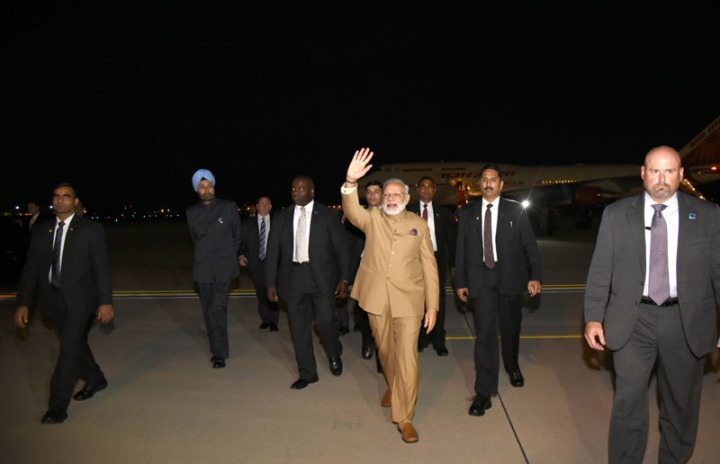
The Prime Minister, Shri Narendra Modi arrives at Joint Base Andrews, Washington DC, USA on June 25, 2017.
Prime Minister Narendra Modi has said that his Government is committed to take tough action against firms helping in hiding black money without being concerned about its political implications.
The Prime Minister speaking at the foundation day function of Institute of Chartered Accountants of India in New Delhi last evening said, three lakh companies have come under scanner post demonetisation and more than one lakh companies have been de-registered by the Registrar of Companies. Mr Modi said, large number of shell companies have been identified against whom action is being initiated.
The Prime Minister emphasised it would become more difficult for people stashing illicit funds in Swiss banks once automatic tax information exchange regime begins between India and Switzerland. He said it is surprising that in a huge country like India, there are only 32 lakh people who claim to have income above ten lakh rupees per annum.
Mr Modi urged the CAs to take the lead in the journey towards India’s economic growth. He called upon Chartered Accountants to advice their clients to pay their taxes honestly.
The Prime Minister said the money which government receives as taxes are spent on public welfare and development of the country. He said the foundation day of the ICAI coincides with the launch of GST which intends to weed out black money from the system. He said the CAs will have to play a major role following implementation of Insolvency and Bankrupcy Code. He termed the CAs as Charter of Accuracy and Compliance of Authenticity.
Earlier, addressing the gathering, Finance Minister Arun Jaitley said government has rationalised the taxation system and made it online. He said India has become most favored destination for FDI and 90 percent FDI is coming through automatic route. He said now subsidies are going directly to bank accounts of beneficiaries through financial inclusion.
Mr Jaitley said government tried to make the country’s economy formalised and digital through demonetisation. The Finance Minister also said there is no need to worry about GST as it is joint decision of Centre and state governments.
Edit"PM Modi warns of tough action against black money hoarder"

DP CLAIMS DELHI SAFER- ITALIAN ABDUCTED IN PRE-PAID TAXI
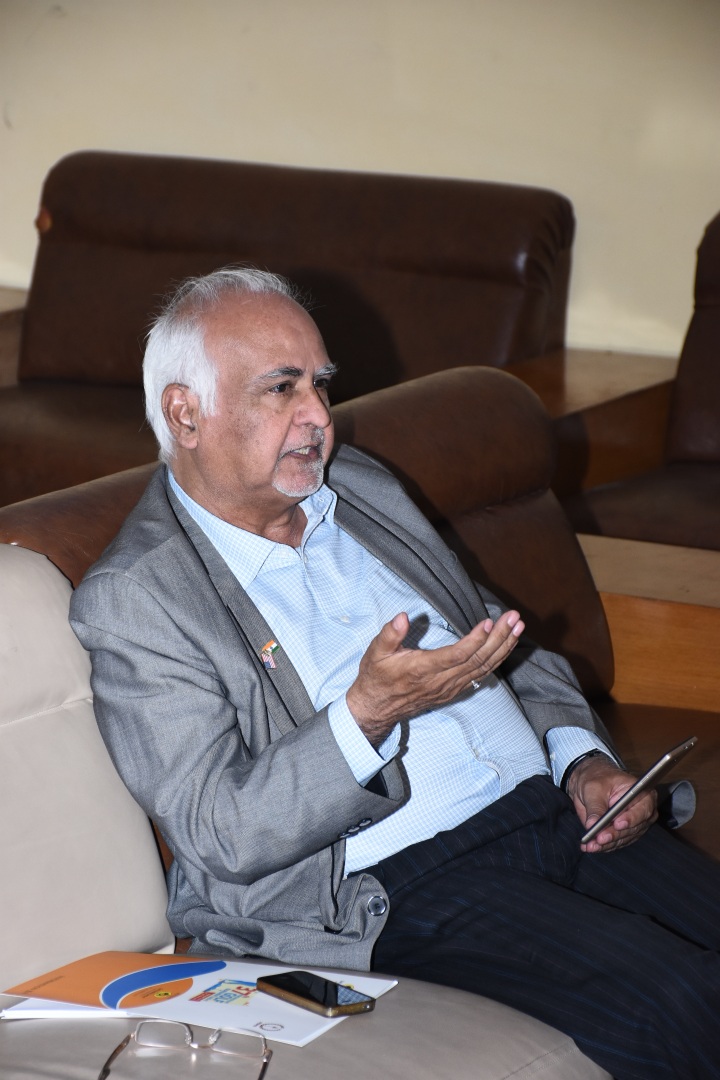
Mr. Naresh Kumar Sagar interacting with the panelists during Press MeetJuly02, 2017 (C) Ravinder Singh progressindia2015@gmail.com
Delhi Police claimed reduction in crime in New Delhi district but DP story was at the bottom of page 2 of June29 of TOI – stories above it related to Protests at Jantar Mantar, regarding attacks on Minorities & Dalits, Italian Tourist Abducted in Pre-Paid Taxi, A person Batters to death, many hundreds Thefts, Stalking, Murders, Eve Teasing, Cheating that couldn’t be covered by TOI  – should also include Senior Citizens, victims of Crimes, False cases registered by DP and Avoid Registering Crimes.

was in a Patiala House Court on May30, 2017 in connection with 66A case instituted much after Supreme Court of India declared it as Unconstitutional in April2015 –
– Was Horrified to notice Delhi Police took keen interest in ‘Proclaimed Offender’ case tens of thousands of s138 Cases were registered for Check Bounce in Case of Vodafone Telephone bills – amount ranging from Rs.500 to Rs.2000 and Consumers in avoiding arrest hide somewhere and DP declare them as Proclaimed Offenders, are required to seek bail worth Rs.10,000 for personal and Rs.10,000 for guarantors plus many more thousand Advocate cost.

Italian Tourist hired PRE-PAID TAXI from Delhi Airport on June20 – top security zone to Paharganj Hotel another High Security Zone that reported Terrorist Attack also – was Abducted and taken to Chandigarh – she escaped on her own in 6 days* – no Credit to Delhi Police. [Her family in Italy Must be Enquiring From Embassy – Police Has No Idea.]

*No TRACKING of Delhi Taxi passing through CCTVs at Toll Plazas, Mobile Phone Tracking of Taxi Driver, No Call Details or GPS Tracking – Delhi Police Had No Verified Numbers.
— No Mobile Phone, Registration and GPS Numbers inside Autos & Taxis.

Delhi Airport has High Resolution CCTV Cameras – Every Vehicle entering or leaving is Captured and Photographed and ‘Number Plate’ – in addition to PRE-PAID Booking – Delhi Police didn’t Notice – NO REPORTING OF ‘TAXI’ INVOLVED IN ABDUCTION FOR 6 DAYS – Taxis are expected to be back in 2 hours in Peak Hours, 1 hour at night. 

Even Pre-Paid Taxis Owners-Drivers at Delhi AIRPORT are ‘NOT POLICE VERIFIED’, when
All 5 Lakh Drivers & Owners of Commercial Vehicles Should Be VERIFIED ANNUALLY.
                                                                                                                                                            
Delhi Police Fails to Prevent STREET CRIMES as all Police Officers own Two Wheelers or Cars besides – Mob Attacks Even in CCTV Camera Zones. CCTV Cameras are mostly Don’t Work or Monitors Used to Watch Films & Movies.

DP & Railway Stations has CCTV – Delhi Police ‘Couldn’t IDENTIFY DAILY PASSENGERS’ from CCTV, Footage of some Office gave the main lead.

Except VIP Security, Delhi Police to WORK Under Delhi Government Control.
Ravinder Singh, Inventor & Consultant, INNOVATIVE TECHNOLOGIES AND PROJECTS
Y-77, Hauz Khas, ND -110016, India. Ph: 091- 9871056471, 9718280435, 9650421857
Ravinder Singh* is a WIPO awarded inventor specializing in Power, Transportation,
Smart Cities, Water, Energy Saving, Agriculture, Manufacturing, Technologies and Projects
Edit"DP Claims Delhi Safer- Italian Abducted in Pre-Paid Taxi"

5.1 M QUAKE HITS HOKKAIDO ISLAND

A 5.1-magnitude earthquake struck Japan’s northernmost Hokkaido island. Japan Meteorological agency said earthquake hit Abira settlement late yesterday, while Iburi province suffered from 5-magnitude quakes within 7 points scale used in Japan. According to local authorities, one woman was injured in the earthquake after she fell down and broke her ribs. Traffic was temporarily blocked in the affected area.
Edit"5.1 M quake hits Hokkaido island"

SERVICE TAX DEPARTMENT PRESS MEET ANNOUNCING THE ARRIVAL OF GST. 
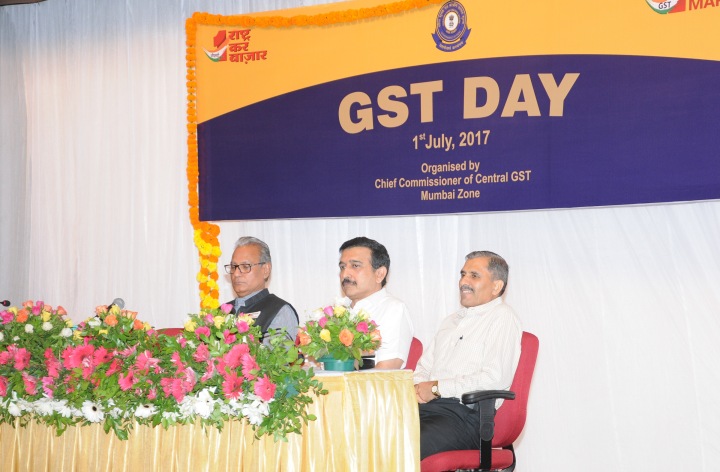
7._Shri.S.C.Varshney__Chief_Commissioner_GST___John_Joseph__Chief_Commissioner_Navasheva___Rajeev_Ta_1467628Service Tax Department & Government of India hosted a press meet announcing the arrival of GST. 
The press meet saw the presence of Chief Commissioner CGST Mumbai Zone-S.C. Varshney, Additional Commissioner CCO- S.C. Gangar, Deputy Commissioner CCO- S.K. Mishra, Commissioner Mumbai Cebtral- K.C. Gupta, Joint Commissioner Mumbai Central- Pankaj Kumar, Additional Commissioner Mumbai South- K.K. Gupta, Commissioner Mumbai East- Piyusha Patnaik
Additional Commissioner Mumbai East- Nilkhanth Shelke, Commissioner Mumbai West- Sandeep Puri
Additional Commissioner Mumbai- Manpreet Arya, Commissioner Audit 2-Suresh Krishnani
Additional Commissioner 2- A.K. Goyal, Commissioner Audit 3 – Shanbhoo Nath, Additional Commissioner- Manisha Goyal.
Ushering into Saturday, Service Tax Department & Government of India announced the arrival of the Goods and Services Tax ( GST) in India. All the dignitaries Sushil Solanki , Nihal Kothari , Shouvik Roy,Ashish Pednekar (speakers) spoke about GST, India’s biggest-ever tax reform, which will bring in place a single tax system that some analysts predict will be bigger than that of the European Union.
Service Tax Department & Government of India kicked off proceedings, delivering a short address in which they called GST an “important achievement for the entire country.” “The old India was economically fragmented, the new India will create one tax, one market and for one nation”.
Addressing the gathering, Chief Commissioner CGST Mumbai Zone-S.C. Varshney
said the introduction of GST is a moment of precedent for the country “I had always believed that GST was a matter of time and was happy when it was enacted and I gave assent to the Constitution amendment last year,” he said.
GST is expected to check tax evasion and broaden tax base. In the new regime, all filings will be done only through electronic mode to ensure non-intrusive administration. This will minimise taxpayers’ physical interaction with the tax officials.
The GST regime seeks to reduce rates of over 50 per cent of items of daily use and charge others at much lower rate of 5 per cent, 12 per cent and 18 per cent.
A higher tax rate is imposed on luxury and sin goods at 28 per cent in the new regime. Certain services like telephone, banking and insurance are expected to feel the pinch of higher taxes.
GST also promises taxpayers a refund against their sales within 60 days. Similarly, exporters will get refund within seven days. For protection of consumer rights, the new law provides anti-profiteering provisions. In a departure from the normal practice, the GST will be administered together by the Centre and the states.
Complications, however, are expected, and the general consensus is that it will take at least a month before GST’s true impact is realised.
Though even critics of the roll out agree that in the long run, GST will benefit the Indian economy.
Regards
Picture N Kraft Team
19/101 Mhada Complex, Oshiwara Garden Lane,
New Link Road, Andheri (West) Mumbai-400053
Email-parul@picturenkraft.com
Edit"Service Tax Department press meet announcing the arrival of GST. "

34TH YNBCHAMP, DAY 2- UP BOYS BT PUNJAB; HOSTS TELANGANA BOYS OPEN WITH WIN
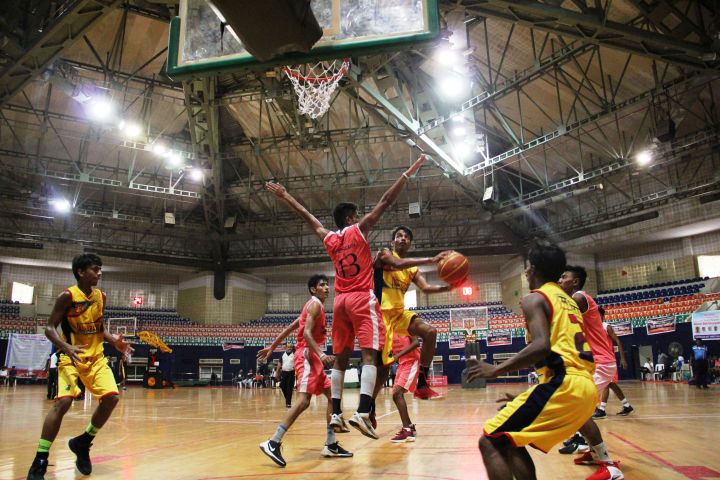
Tanay_Thatte_of_Maharashtra_led_from_the_front_yet_again__this_time_in_beating_Chhattisgarh_by_1_poi_3565955
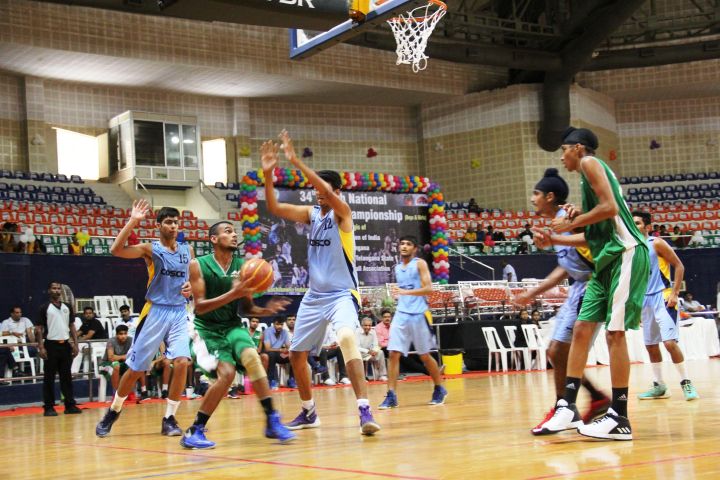
34th Youth National Basketball Championship Day 2- UP boys bt Punjab; Hosts Telangana boys open with win
Bengaluru, 2nd July 2017:  The 34th Youth National Basketball Championship for Boys and Girls entered Day 2 today at the Indoor Stadium, Gachibowli in Hyderabad.

The Championship is being organized by the Hyderabad District Basketball Association under the aegis of the Telangana Basketball Association and the Basketball Federation of India.

Maharashtra, UP and Telangana boys post wins

A short while ago, Maharashtra boys beat Chhattisgarh by 1 point, 54-53. This was after they upset Tamil Nadu yesterday 69-67. Maharashtra is now 2-0 and is the top placed team in Group B, with 2 matches still to be played. Just like in the game against Tamil Nadu yesterday, yet again, it was Maharashtra’s captain Tanay Thatte who came through for his side. Tanay’s match-high 25 points also included two clutch freethrows in the final few seconds that secured the win.

In a significant league encounter this morning, last year’s runners up Uttar Pradesh continued to shine at the U16 level this year too, beating Punjab 68-62. UP (1-0) and Punjab (1-1) are both teams favoured to reach the decisive stages of the Championship so this clash between these strong teams was an excellent appetizer for things to come. Punjab centre Princepal Singh, who is already dominating at the National U18 level and only last month helped his state win the Junior National Championship had 21 points today, but it paled in comparison to UP’s Priyhanshu who scorched his way to 42 game winning points. Scores were tied at the end of the first quarter and remained almost neck and neck going into the halfime. Q3 saw UP pull ahead thanks to 5 straight points by Priyhanshu and by the start of the fourth period UP was up by 8 points, 54-46. Punjab’s Akashdeep Sharma hit 5 threes to complement Princeipal, but eventually it was UP that secured the W.

Earlier in the morning, hosts Telangana boys opened with a lopsided 59-10 win over Puducherry in lower Level 2 action. Telangana will need to top its Group F and finish among the top two Level 2 teams in order to progress to the knockout stages.

In girls’ Level 1 play, Kerala overcame the disappointment of yesterday’s loss to Karnataka by beating Uttar Pradesh 69-48. Balanced scoring by Kerala, with 4 players posting 15 points or more made it hard for UP to contain their talented opponents.

Results from Day 2 (2nd July 2017) until 12:30 pm

Girls

Level 1
Group B
  1. Kerala (Anmariya Johny 17, Sandra KA 16, Aparna Sadasivan 15, Anagha Nair 15) bt Uttar Pradesh (Vartika Kushwaha 23, Muniba Ali 16) 69-48 [14-16, 13-12, 22-10, 20-10]

Level 2
Group C
  1. Haryana (Suman 17, Ritika 9) bt Goa (Kimeron Vas 8, Naomi Nunes 7) 36-15 [3-3, 13-5, 8-4, 12-3]
Group D
  1. West Bengal (Jyothi Routh 22, Liza Deb 19) bt Chandigarh (Tarini Boprai 31, Nilisha 6) 61-50 [21-12, 13-14, 13-16, 14-8]
  2. Uttarakhand (Divyangana 14, Kamaljit 12) bt Jammu & Kashmir (Chitreshi 4, Ananya 4) 22-8 [2-5, 10-3, 5-0, 5-0]
Group E
  1. Delhi (Khushi 11) bt Bihar (Kushi Prakhar 2) 43-2 [10-2, 17-0, 14-0, 2-0]
Group F
  1. Andhra Pradesh (P Sathya Sai 21) bt Assam (Lakshmi Kachari 6) 35-14 [15-6, 5-1, 6-4, 9-3]
  2. Odisha (Lipramayee 18) bt Puducherry (Monisha 4) 39-21 [8-2, 12-11, 12-4, 7-4]


Boys

Level 1
Group B
  1. Uttar Pradesh (Priyhanshu 42, Shubham Karwasara 9) bt Punjab (Princepal Singh 21, Akashdeep Sharma 17) 68-62 [12-12, 18-17, 24-17, 14-16]
  2. Maharashtra (Tanay Thatte 25, Om Pawar 14, Arjun Yadav 4) bt Chhattisgarh (Ayushman Singh 16, Govind 15, Ritesh Yadav 9) 54-53 [17-21, 10-9, 9-11, 18-12]

Level 2
Group C
  1. Telangana (Vinay Kothari 11, Vighneshwar 11, Sumant Marni 10) bt Puducherry (P Pavithran 6) 59-10 [22-4, 17-0, 14-4, 6-2]- This match was originally scheduled to be played on 1st July but was subsequently postponed.
Group E
  1. Madhya Pradesh bt Tripura walkover*

Results from Day 1 (1st July 2017) after 7:00 pm


Girls

Level 1
Group B
  1. Karnataka (Grishma N 17, Sanjana Ramesh 11) bt Kerala (Aparna Sadasivan 11, Sandra K A 9) 52-45 [14-6, 13-18, 12-10, 13-11]

Level 2
Group C
  1. Assam (Lakshmi Kachari 12, Shinjini Basu 7) bt Puducherry (Monisha K 5) 34-24 [6-2, 6-7, 10-10, 12-5]
  2. Chandigarh (Jaismeen Kaur 10, Tarini Boprai 4) bt Jammu & Kashmir (Chitresh Gupta 3) 21-3 [12-0, 6-0, 3-0, 0-3]
Boys

Level 1
Group B
  1. Maharashtra (Tanay Thatte 38, Kamlesh Rajbhar 13) bt Tamil Nadu (Gokul V 31, Dhanush G 9, Lokeswaran M 8) 69-67 [16-11, 21-19, 18-23, 14-14]

Level 2
Group D
  1. Gujarat (Rushal Khoilya 22, Rishadh Chaudhary 20, Bhavya Upadhyay 9) bt Uttarakhand (Ansh Saini 19, Arin Singh 7) 62-37 [11-4, 16-14, 21-14, 14-5]
  2. Bihar (V Naga Durga 14, S Nayeem 13, J Amruth Raj 11, M Mani Kanta 10) bt Jharkhand (Sushant Deep 11, Prabhat Kr M 10, Varun Raipat 7) 57-34 [14-11, 10-3, 8-11, 25-9]
Group E
  1. Assam bt Tripura walkover*
Group F
  1. Andhra Pradesh (V N Durga Prasad 22, M Manikanta 17, A S Pavan Kumar 10) bt Goa (Jeshua Pinto 6) 73-16 [29-6, 11-4, 16-6, 17-0]
*The Tripura boys team has withdrawn itself from the Championship.

About the 34th Youth National Basketball Championship

The Championship is featuring 25 boys’ and 25 girls’ teams in the U16 age group, from various Indian States and Union territories, and is being played in a league cum knockout format.

The matches are being played at the Indoor Stadium, Gachibowli, Hyderabad from 1st to 8th July.


The teams are grouped into two levels –Level 1 features the top 10 teams from the previous championship divided into two groups of five teams each (Group A and B), while Level 2 features the remaining teams divided into four groups (Group C, D, E, F).

In the league stages, all the teams play each of the other teams in their group once. The top three teams from each of the groups in Level 1 advance directly to the quarterfinals, while the fourth placed teams play pre-quarterfinal games against the top two teams from Level 2.

The competition is expected to be fierce beyond the immediate prospect of glory, because the teams that finish last in each of the groups in Level 1 are relegated to Level 2 for the next edition of the tournament, while the Level 2 teams that qualified for the pre-quarterfinals will replace them in Level 1 in the next edition.

Over the years, this Championship has provided a platform for the country’s best players in the U16 category to showcase their talents. This allows selectors to identify and shortlist the most promising players and coaches to parachute into national team training camps with an eye towards participation in international events.

About Basketball Federation of India

The Basketball Federation of India or BFI is the governing and controlling body of basketball in India, and is responsible for the development and promotion of the sport at all levels. BFI has been involved in conducting camps, clinics, events, and training sessions at its academies for the development of basketball. BFI came into being in 1935 and took complete control over Indian basketball in 1950. Prior to that time, the Indian Olympic Association handled the conduct of Indian basketball championships. Since 1950, the BFI has been conducting various such championships, from the grassroots to senior team participation in international tournaments. In addition, the BFI has been responsible for the establishment of strong sub-junior and junior level programs. The BFI has to its credit produced several international players of repute, among them 17 have been bestowed with the honour of Arjuna Awards. Earlier in June 2015, Satnam Singh Bhamara made history by becoming the first Indian national to be drafted by an NBA team, when he was selected by the Dallas Mavericks.

Premier Skills Coaching Coaches

Saturday, 1 July 2017

1.5LAKH PEOPLE AFFECTED RIVERS SURGE IN ASSAM

Assam, 1.5 Lakh people have been affected in current surge of water in five districts. Official sources informed that Karimganj district in Barak valley is the worst affected as 1 lakh 34 thousand people are reeling under the fury of flood in this district alone.
Several rivers are flowing above the danger level in Brahmaputra and Barak valley. 266 relief camps and distribution centres have been set up at Karimganj and Cachar districts. Over 5 thousand flood hit people are taking shelter at relief camps. Surging water also damaged huge crop areas in the state.
Edit"1.5Lakh people affected rivers surge in Assam"

EC LAUNCHES SPECIAL DRIVE TO ENROLL LEFT OUT VOTERS

Election Commission (EC) has launched nation wide month long special drive from today for maximization of registration of eligible electors with focus on left out eligible young citizens in age group of 18-19. During the drive, the EC will remove names of registered dead electors, if any, from electoral rolls.
During the month of June , the election officials have completed preparatory work like identification of critical gaps in existing electoral rolls, strengthening of infrastructure and sensitization of ground level electoral machine. The EC has also sent communication to all recognised political parties seeking their cooperation for success of the Special Drive.
During the Special enrollment Drive, which will be completed by 31st July, special attention would be given receiving Form 6 for enrolment of new electors and Removal of names of registered dead electors, if found any.
Edit"EC launches special drive to enroll left out voters"

GROWTH OF EIGHT CORE SECTORS SLOWED TO 3.6 % IN MAY


The growth of eight core sectors slowed to 3.6 per cent in May this year due to fall in output of coal and fertilisers.The growth rate of eight infrastructure sectors including coal, crude oil, fertiliser, steel, cement and electricity was 5.2 per cent in May last year.
According to data released by Ministry of Commerce and Industry,coal and fertiliser productions recorded negative growth of 3.3 per cent and 6.5 per cent respectively. Steel sector growth dipped to 3.7 per cent last month as against 13.4 per cent in May 2016.
Slow growth in key sectors would also have implications on the Index of Industrial Production number as these segments account for about 41 per cent to the total factory output. In April this year, these eight sectors had recorded a growth rate of 2.8 per cent.

Edit"Growth of eight core sectors slowed to 3.6 % in May"

RAHUL GANDHI : GST LAUNCH IS TAMASHA

1376992_419274558173958_172511059_n
Congress Vice President Rahul Gandhi has dubbed the implementation of GST as a “tamasha”, saying the reform was being rushed through in a “half-baked” manner. Currently abroad on a holiday, Mr. Gandhi, hit out at the government through twitter. He accused the government of being “insensitive” for rolling out GST without planning, foresight and institutional readiness, as it did during demonetisation.
Meanwhile, the opposition stood a divided house as NCP, JD(U), BSP, BJD, Samajwadi Party and Janata Dal(S) participated in the midnight launch of the GST, while the Congress, RJD, Trinamool Congress, Left, the DMK, National Conference boycotted the launch event.
Ruptures in the opposition unity emerged barely a week after 17 parties joined hands to put up a joint candidate against the ruling NDA nominee for the July 17 Presidential election.
The NCP, a key constituent of the Congress-led UPA, broke away from the Opposition ranks, with its chief Sharad Pawar along with Praful Patel and Tariq Anwar attending the event in the Central Hall of Parliament. Mr. Anwar said his party was attending the GST launch as it had supported the legislation on ushering in the new indirect tax regime in the country.
On behalf of JD(U), its Bihar unit chief and Rajya Sabha member Vashisht Narain Singh attended the event.
The BSP, which stood with opposition unity, was represented by two of their MPs. The Samajwadi Party, which had initially announced the boycott, did a somersault by attending the event, saying it found no problem when the party had supported the GST bill in Parliament.
Edit"Rahul Gandhi : GST launch is Tamasha"

GST AFTER MID-NIGHT LAUNCH

15727124_1389848527693346_3870219220386728666_n
India’s biggest tax reform since independence ‘Goods and Service Tax’ (GST) comes into force after the mid-night launch last night. GST, which brings the entire country under single taxation system, was launched by President Pranab Mukherjee and Prime Minister Narendra Modi by pressing a button at a special function in central Hall of Parliament.
Speaking on the occasion, Prime Minister Narendra Modi said the GST was the result of combined efforts of all political parties and it does not belong to any one party or one government. He said it is a great example of cooperative federalism which shall facilitate inclusive growth of the country. Mr.Modi said all states are slated to gain immensly as they will now get equal opportunities of development. The Prime Minister said GST is the first of its kind system in the country when both centre and states will be putting consolidated efforts in the same direction.
In his address, President Pranab Mukherjee said GST council, centre and states should continuously improve and refine the GST in the same spirit that we have seen till now. He said the GST Council should continuously review the implementation and suggest suitable improvements to the new indirect taxation regime.
Speaking on the occasion, Finance Minister Arun Jaitely said the GST will lower prices, make tax avoidance difficult, boost GDP and bolster government resources allowing greater spending on the welfare of the people. He said there will also be a check on inflation.
GST roll-out – Complete transformation of the Indirect Taxation Landscape
The Goods and Services Tax came into force at midnight, amid a historic midnight session in the Central Hall of Parliament yesterday. Hon’ble President Shri Pranab Mukherjee, Hon’ble Prime Minister Shri Narendra Modi, and Hon’ble Shri Finance Minister Shri Arun Jaitley addressed the gathering, before the Hon’ble President and the Hon’ble Prime Minister pressed a button to mark the launch of GST.
The Hon’ble President of India, Shri Pranab Mukherjee graced a special function organized to launch the Goods and Services Tax (GST) in the midnight of June 30- July1, 2017 in the Central Hall of Parliament House, New Delhi.
“Speaking on the occasion, the Hon’ble President said that the introduction of GST is a momentous event for the nation. It was also a moment of some satisfaction for him because, as the Finance Minister, he had introduced the Constitution Amendment Bill on 22nd March 2011. He was closely involved in the design and implementation and had the occasion to meet the Empowered Committee of state finance ministers, formally and informally, as many as 16 times. He had also met the Chief Ministers of Gujarat, Bihar, Andhra Pradesh and Maharashtra a number of times. He had a vivid recollection of those meetings and the various matters that were raised. Given the magnitude of the task, which spans constitutional, legal, economic and administrative spheres, it was not a surprise that there were many contentious issues. Yet, he found both in those meetings and in his many interactions with Chief Ministers, Finance Ministers and officers of States, that most of them had a constructive approach and an underlying commitment to the introduction of GST. He, therefore, remained confident that GST was a matter of time and it would eventually be implemented. His confidence stood justified when, on 8th September 2016, after the Bill was passed by both Houses of Parliament and more than 50 percent of State Legislatures, he had the privilege of giving assent to the Constitution (One Hundred and First Amendment) Act.”
Speaking on the occasion, the Hon’ble Prime Minister said that the day marks a decisive turning point, in determining the future course of the country.
The Goods and Services Tax came into force at midnight, amid a historic midnight session in the Central Hall of Parliament. Hon’ble President Shri Pranab Mukherjee, Hon’ble Prime Minister Shri Narendra Modi, and Hon’ble Finance Minister Shri Arun Jaitley addressed the gathering, before the President and the Prime Minister pressed a button to mark the launch of GST. Speaking on the occasion, the hon’ble Prime Minister said that the day marks a decisive turning point, in determining the future course of the country.
He recalled that the Central Hall had been witness to several historic occasions in the past as well, including the first session of the Constituent Assembly, India’s independence, and the adoption of the Constitution. He described GST is an example of Cooperative Federalism. He quoted Chanakya to say that hard work can overcome all obstacles and help us accomplish even the most difficult of objectives. He said that just as Sardar Patel had ensured political integration of the country, GST would ensure economic integration. Recalling the famous scientist Albert Einstein who said that income tax is the most difficult thing to understand in the world, he said that GST would ensure one nation, one tax. He said that GST would lead to immense savings of time and cost. Savings of fuel due to elimination of delays at State border crossings will help the environment as well, he added. The Prime Minister said GST would lead to a modern tax administration which is simpler, more transparent, and helps curb corruption.

Government  levy of 10% Basic Customs Duty (BCD) on cellular mobile phone, specified parts and certain electronic goods
The Government had constituted Inter Ministerial Committee [IMC] comprising of officers from Ministry of Electronics and Information Technology (MeitY), the Department of Commerce (DoC), Department of Telecommunication (DoT) and Department of Revenue (DoR) to identify electronic / IT / telecom products, which are not Information Technology Agreement [ITA] – I bound, for customs duty enhancement on them.
With effect from 01.07.2017, the Government has imposed 10% basic customs duty (BCD) on:
1) Cellular mobile phones and specified parts of cellular mobile phones like charger, battery, wire headset, Microphone and Receiver, Key Pad, USB Cable etc.
2) Certain other specified electronic goods (Detailed List enclosed)
The present exemption from basic customs duty on specified parts of mobiles, namely, Printed Circuit Board Assembly (PCBA), Camera Module, Connectors Display Assembly, Touch Panel / Cover Glass Assembly, Vibrator Motor / Ringer will continue. Further, inputs and raw material for manufacture of parts of above specified electronics goods including mobile phones will also continue to be exempt from BCD.
Government reduces tax rate on fertilizers from existing 12% to 5 % under GST for the interests of the farmers
Under GST regime, a uniform MRP of Rs. 295.47 per 50 kg bag to be fixed across the country. The GST regime to deter inter-state smuggling of fertilizers by integrating the entire fertilizer market into a single market farmers to benefit to the tune of Rs. 1261 crores under GST regime
The Union Minister for Chemicals & Fertilizers and Parliamentary Affairs, Shri Ananthkumar briefed on the outcome of the 18th meeting of the GST Council, held on 30th June 2017, regarding Fertilizer sector. The Minister said that it was decided to reduce the GST rate of fertilizers from the existing 12% to 5%. This decision was primarily taken in the interests of the farmers. The Government has also taken up with the Industry to pass on the benefit to the Farmers, the Minister informed.
GST Journey
Importance of GST
The biggest tax reform since independence – GST – will pave the way for realization of the goal of One Nation – One Tax – One Market. GST will benefit all the stakeholders namely industry, government and consumer. It will lower the cost of goods and services, give a boost to the economy and make the products and services globally competitive, giving a major boost to ‘Make in India’ initiative. Under the GST regime, exports will be zero-rated in entirety unlike the present system where refund of some of the taxes does not take place due to fragmented nature of indirect taxes between the Centre and the States. GST will make India a common market with common tax rates & procedures and remove economic barriers. GST is largely technology driven and will reduce the human interface to a great extent. GST is expected to improve ease of doing business in India.
In majority of supplies of goods, the tax incidence approved by the GST Council is much lower than the present combined indirect tax rates levied [on account of central excise duty rates / embedded central excise duty rates / service tax post-clearance embedding, VAT rates or weighted average VAT rates, cascading of VAT over excise duty and tax incidence on account of CST, Octroi, Entry Tax, etc.] by the Centre and State(s).
Journey of GST after the Constitutional Amendment Act, 2016
After the assent of the Hon’ble President on 8th September, 2016, the 101th Constitutional Amendment Act, 2016 came into existence. The GST Council was constituted on 15.9.2016.
Since its formation in September, 2016 the GST Council has held 18 meetings. The Finance Ministers of all the States or their representative along with State and Central Government officials have participated in these extensive meetings and formulated the law and procedure to implement this historic tax reform. It was a mammoth task involving 27000+ man hours of intensive work. More than 200 meetings of the officers of the Centre and States took place in different parts of the country to expedite the implementation of GST.
While framing GST Acts and Rules, enhanced ‘Ease of doing business’ for the taxpayers was a key consideration and accordingly the roles and responsibilities of the States and Central govt have been defined. In a short span of time, the GST council has cleared GST laws, GST Rules, Tax rate structure including Compensation Cess, Classification of goods and services into different rate slabs, exemptions, thresholds, structure for tax administration, etc. All the decisions of Council were taken with consensus. While formulating the Acts and Rules, extensive participatory consultations with trade and industry including other significant stakeholders were undertaken. Feedback was also obtained by posting draft Acts and Rules on the websites and inviting comments from the public.
On 29th March, 2017, the Hon’ble Finance Minister of India tabled four Goods and Services Tax (GST) Bills for consideration and passage in the Lok Sabha namely The Central Goods and Services Tax (CGST) Bill, 2017, The Integrated Goods and Services Tax (IGST) Bill, 2017, The Union Territories Goods and Services Tax (UTGST) Bill, 2017 and the GST (Compensation to States) Bill, 2017. They were passed by the Lok Sabha on 29th March, 2017 and by the Rajya Sabha on 6th April, 2017.
The GST Council has decided the final structure of GST as follows:
The threshold limit for exemption from levy of GST is Rs. 20 lakh for the States except for the Special Category, where it is Rs 10 Lakh.
A four slab tax rate structure of 5%, 12%, 18% and 28% has been adopted for GST. A cess would be levied on certain goods such as luxury cars, aerated drinks, pan masala and tobacco products, over and above the GST rate of 28% for payment of compensation to the states.
The threshold for availing the Composition scheme is Rs. 75 lakh except for special category States where it is Rs. 50 lakh and they are required to file quarterly returns only. Certain categories of manufacturers, service providers (except restaurants) are out of the Composition Scheme.
Features of GST
GST envisages all transactions and processes to be done only through electronic mode, to achieve non-intrusive administration. This will minimise tax payers physical interaction with the tax officials.
GST provides for the facility of auto-populated monthly returns and annual return.
It also facilitates the taxpayers by prescribing grant of refund within 60 days, and provisional release of 90% refund to exporters within 7 days. Further facilitation measures include interest payment if refund is not sanctioned in time, and refund to be directly credited to bank accounts.
Comprehensive transitional provisions for ensuring smooth transition of existing taxpayers to GST regime, credit for available stocks, etc.
Other provisions include system of GST Compliance Rating, etc.
Anti-profiteering provisions for protection of consumer rights.
Role of GST Network (GSTN)
GSTN has been created as a section 25 private limited company with Strategic Control with the Government, to function as a common Pass-through portal for taxpayers. On this common portal, taxpayers will submit their registration applications, file returns, make tax payments, claim refunds etc. GSTN has been provided with a robust IT platform and it will provide interface to 80 lakh taxpayers and thousands of tax officials. All filings under GST will be done electronically. While GSTN remains a front-end, at the back end, the IT systems of CBEC and different states interface with the GSTN IT network to provide a seamless end to end processing of tax returns for the taxpayers. 64,000 officials have been trained on the GST portal from February till June 2017. The GSTN IT systems have undergone load tests, performance tests, vulnerability tests, security and all other mandatory tests.
Enrolment of existing taxpayers of the State tax administrations and the Central Board of Excise and Customs to the GST system commenced on 8thNovember, 2016. More than 66 lakh taxpayers have activated their account at the GST portal.
GST Application on Payment has been operationalized. 25 banks have been integrated with the GST Common portal and will be providing e-payment and Over the counter payment facilities as well as payment through NeFT/RTGS and credit/debit card.
GST OUTREACH PROGRAMME
The Government has stepped up its outreach programme through various events, workshops, media, television to reach masses. Field formations of CBEC, at all levels have been activated to carry out interaction with the trade and industry to help them with the migration to GST and to clear their doubts. The field units of CBEC have run campaigns using mobile vans to reach the assessees at their door-step to help them with the GST migration and transitional issues. A total of 4700 workshops have been conducted across India.
An extensive multi-media campaign through print and electronic media, outdoor hoardings, etc. has been carried out for informing, educating and assisting taxpayers and other stake-holders to enable a smooth transition to GST.
RE-ORGANISATION OF CBEC
Implementation of GST has necessitated reorganisation of the Central Board of Excise & Customs (CBEC) formations for administration of GST. The reorganisation involved bringing about structural changes and redeployment of human resources. Redeployment has been done to ensure outreach to the remotest corner. The Directorates which have significant role under the GST have been adequately expanded and strengthened.
The field formations have been restructured as 21 CGST & CX Zones, 107 CGST & CX Commissionerates, 12 Sub-Commissionerates, 768 CGST & CX Divisions, 3969 CGST & CX Ranges, 48 Audit Commissionerates and 49 Appeal Commissionerates.
TRAINING
For a smooth roll out of GST, it was imperative to carry out adequate capacity-building exercise and awareness. National Academy of Customs Indirect Taxes and Narcotics (NACIN) have conducted extensive training programs. In the first phase, nearly 52,000 officers were trained during September, 2016 to January, 2017 through a multi-layered training programme across India. A Refresher Training was also conducted on updated Law, Rules and Procedures and a total of 17,213 officials were trained till 23rd June, 2017. Under the Accredited GST Training Programme, 20 institutes have been certified as ‘Approved Training Partners’ to impart ‘quality training at reasonable cost’ to members of trade/industry and other stakeholders. 2,565 participants have been trained so far (ongoing). NACIN have also trained 2,611 officers from 92 Ministries/PSUs trained so far.
Edit"GST after mid-night launch"

34TH YOUTH NATIONAL BASKETBALL CHAMPIONSHIP TIPS OFF IN HYDERABAD

Delhi_centre_Aryan__guards_the_paint_against_Haryana_during_their_overtime_loss
  • The 34th Youth National Basketball Championship for Boys and Girls tipped off this morning at the Indoor Stadium, Gachibowli in Hyderabad.
  • The opening ceremony will be held at 4 pm today with Shri T Padma Rao Goud and Shri Dr Vivek Anand as chief guests, and numerous other guests of honour and special invitees.
  • Defending Champs Tamil Nadu girls have opened with an easy win over Rajasthan, while Punjab and Karnataka boys too have registered important victories.
  • In an exciting overtime game, Haryana boys have beaten Delhi 69-65.
Bengaluru, 1st July 2017:  The 34th Youth National Basketball Championship for Boys and Girls has tipped off at the Indoor Stadium, Gachibowli in Hyderabad.

The Championship is being organized by the Hyderabad District Basketball Association under the aegis of the Telangana Basketball Association and the Basketball Federation of India.

In the morning matches so far, defending champions Tamil Nadu girls have opened with an easy 76-31 win over Rajasthan. In the boys section, Karnataka and Punjab also registered important victories over Rajasthan and Chhattisgarh respectively. Last year’s semifinalists Karnataka trailed at the end of the first and second quarters before a strong showing in the third period saw them outlast their opponents from western India. In the Punjab vs Chhattisgarh boys game, repeated turnovers in the third quarter cost Chhattisgarh dearly as Punjab was able to pull away for the easy double digit win.

Arguably the most exciting match of the morning was between Haryana and Delhi boys. This level 1 Group A league encounter started with Delhi dominating, with 14-7 and 13-9 opening quarters. That’s when the momentum shifted drastically towards Haryana who clawed their way back in the second half. A buzzer beating two pointer by Haryana’s Mukesh pushed the game into overtime and they continued to shine in the extra five minutes to hand Delhi the heartbreaking loss.

In lower level 2 games, Himachal Pradesh boys and girls, West Bengal girls and MP girls too posted victories in their respective bids to get elevated to Level 1.

Results from Day 1 (1st July 2017) until 1:00 pm


Girls
Level 1

Group A
  1. Tamil Nadu (S Pushpa 14, S Lakshmipriya 13, Monica 10) bt Rajasthan (Ankita Mandia 11, Shatakshi 9, Akshita 8) 76-31 [25-8, 25-10, 14-9, 12-4]

Level 2
Group C
  1. Himachal Pradesh (Pallavi 14, Ramandeep 9, Ananya 8) bt Goa (Katherine Barr 10, Shimei Nathan 6) 49-27 [18-4, 12-6, 14-10, 5-7]
Group D
  1. West Bengal (J Routh 18, B Das 12, M Singh 12) bt Uttarakhand (Srishti Sharma 14) 74-20 [18-0, 15-0, 17-6, 24-14]

Boys
Level 1
Group A
  1. Karnataka (Prashant T 21, Akshan Rao 13, S Sreenivas 10) bt Rajasthan (Kuldeep Singh 23, Digvijay 16, Rajveer 10) 70-65 [13-18, 21-17, 27-16, 9-14]
  2. Haryana (Mukesh 24, Gaurav 18) bt Delhi (Nitish 29, Aman 20) 69-65 [14-7, 13-9, 16-23, 17-21, 9-5(OT)]
Group B
  1. Punjab (Akashdeep Sharma 27, H Singh 9, Md Singh Gill 8) bt Chhattisgarh (Ayushman Singh 14, Govind 11, Ritesh Yadav 08) 55-42 [16-8, 04-12, 18-9, 17-13]

Level 2
Group C
  1. Himachal Pradesh (Abhay 25, S Singh 13, Sahil 6) bt Chandigarh (Sahaij 15, Jaskaran 15, Harkirat 08) 61-55 [6-18, 16-8, 14-11, 25-18]

Group E
  1. Madhya Pradesh (Uday Veer Yadav 29, Divyaraj Singh 23, Mani Thakur 6) bt Odisha (Chitta Ranjan 8, Harsh Vardhar 7, Soilen Mondal 7) 62-26 [23-06, 17-09, 18-06, 04-05]

About the 34th Youth National Basketball Championship

The Championship is featuring 26 boys’ teams and 25 girls’ teams in the U16 age group, from various Indian States and Union territories, and is being played in a league cum knockout format.

The matches are being played at the Indoor Stadium, Gachibowli, Hyderabad from 1st to 8th July.


The teams are grouped into two levels –Level 1 features the top 10 teams from the previous championship divided into two groups of five teams each (Group A and B), while Level 2 features the remaining teams divided into four groups (Group C, D, E, F).

In the league stages, all the teams play each of the other teams in their group once. The top three teams from each of the groups in Level 1 advance directly to the quarterfinals, while the fourth placed teams play pre-quarterfinal games against the top two teams from Level 2.

The competition is expected to be fierce beyond the immediate prospect of glory, because the teams that finish last in each of the groups in Level 1 are relegated to Level 2 for the next edition of the tournament, while the Level 2 teams that qualified for the pre-quarterfinals will replace them in Level 1 in the next edition.

Over the years, this Championship has provided a platform for the country’s best players in the U16 category to showcase their talents. This allows selectors to identify and shortlist the most promising players and coaches to parachute into national team training camps with an eye towards participation in international events.

About Basketball Federation of India

The Basketball Federation of India or BFI is the governing and controlling body of basketball in India, and is responsible for the development and promotion of the sport at all levels. BFI has been involved in conducting camps, clinics, events, and training sessions at its academies for the development of basketball. BFI came into being in 1935 and took complete control over Indian basketball in 1950. Prior to that time, the Indian Olympic Association handled the conduct of Indian basketball championships. Since 1950, the BFI has been conducting various such championships, from the grassroots to senior team participation in international tournaments. In addition, the BFI has been responsible for the establishment of strong sub-junior and junior level programs. The BFI has to its credit produced several international players of repute, among them 17 have been bestowed with the honour of Arjuna Awards. Earlier in June 2015, Satnam Singh Bhamara made history by becoming the first Indian national to be drafted by an NBA team, when he was selected by the Dallas Mavericks.
Edit"34th Youth National Basketball Championship tips off in Hyderabad"